


Selling pre-construction properties is challenging because buyers are asked to commit to something they can’t physically see. Traditional tools like 2D blueprints often fall short in helping buyers visualize these spaces. That’s where interactive presentations come in.
These tools transform static plans into immersive experiences, allowing buyers to:
- Take 360-degree virtual tours of unbuilt properties.
- Experiment with finishes and layouts in real-time.
- Visualize lighting and spatial relationships.
The impact? Properties marketed with 3D tools sell up to 20% faster, often at 3-7% higher prices, and generate 95% more inquiries. Buyers also make decisions up to 30% quicker.
This article explores how developers and agents can use interactive tools like 3D renders, virtual walkthroughs, and customizable floor plans to make pre-construction sales easier and more effective. From understanding buyer psychology to meeting U.S. market standards, you’ll learn how to create engaging presentations that speed up sales and build buyer confidence.
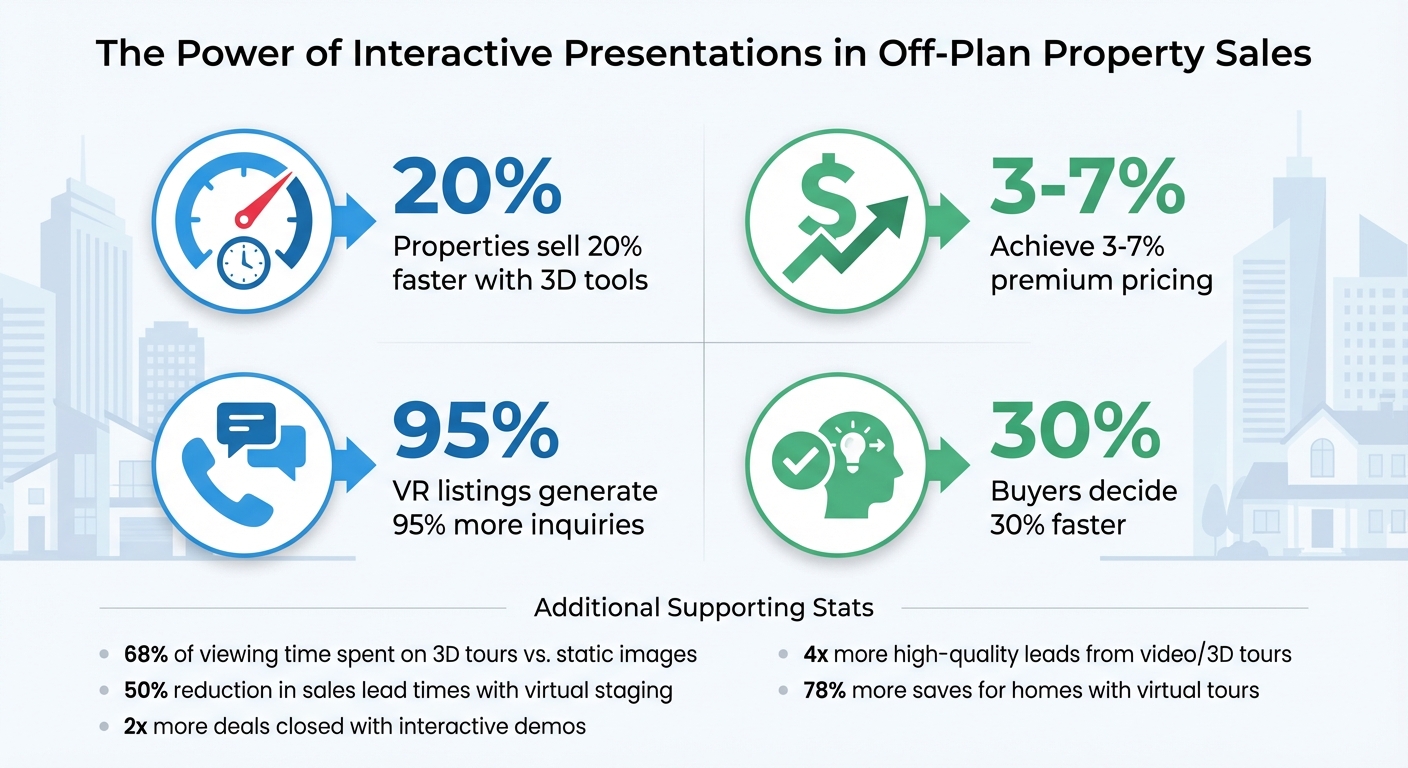
Interactive Presentations Impact on Off-Plan Property Sales Statistics
Core Components of Effective Off-Plan Presentations
How Buyers Think About Unbuilt Properties
When purchasing a pre-construction property, buyers are essentially investing in a vision rather than a physical space. This naturally leads to uncertainty – they’re not just trying to understand the layout but also imagining how their daily lives might fit into it. That’s where interactive visuals come in. By transforming flat blueprints into immersive 3D environments, these tools allow buyers to virtually explore the property, making it easier to grasp spatial relationships that static floor plans simply can’t convey.
But it’s not just about the technical aspects – emotional connection matters too. Virtual staging, complete with carefully chosen furnishings, helps potential buyers picture themselves living in the space. This "lived-in" feel can ease concerns about buying something that hasn’t been built yet. The numbers back this up: properties marketed with advanced 3D tools sell 20% faster and often fetch prices that are 3–7% higher. Listings with VR capabilities see 95% more inquiries, and buyers using these tools make decisions up to 30% quicker.
These findings highlight the importance of using the right visual elements in off-plan presentations to bridge the gap between imagination and reality.
Required Content for Off-Plan Presentations
A strong off-plan presentation starts with high-quality, photorealistic 3D renders of both the interior and exterior of the property. Aerial views add another layer of context, showing buyers the surrounding neighborhood, including schools, parks, and shopping areas. Lifestyle renders – images that showcase the space as if it’s already lived in – help create the emotional connection that often drives purchase decisions.
Interactive elements elevate the experience further. For instance, clickable floor plans allow buyers to zoom in on specific rooms to view detailed perspectives. Neighborhood maps with clickable icons marking local amenities can provide additional context, while tools like mortgage calculators help clarify financial considerations. Virtual staging is another powerful tool, offering a cost-effective alternative to physical staging, with typical costs ranging from $2,000 to $4,000 per month. Together, these visual and interactive components not only reduce uncertainty but also help accelerate the buying process.
With the content in place, the next step is ensuring the technical setup aligns with U.S. market expectations.
Technical Setup and U.S. Market Requirements
Presentations designed for U.S. buyers need to feel familiar and localized. That means using U.S. measurements (feet and inches), dollar-based pricing (e.g., $450,000), and terminology like "condos". They should also work seamlessly across various platforms – touchscreen kiosks in sales centers, project websites, mobile devices, and VR headsets. Considering that buyers spend about 68% of their viewing time engaging with 3D tours rather than static images, optimizing for mobile devices is especially crucial.
Real-time visualization tools, such as Unity and Unreal Engine, add another layer of engagement. These tools let buyers rotate buildings, swap materials like flooring or countertops, and see changes instantly. They can even integrate live inventory data to keep unit availability up to date. For developers, Building Information Modeling (BIM) files can be directly imported into these platforms, making it easier to create detailed, navigable 3D experiences with minimal extra effort.
Lastly, every presentation should include a clear call-to-action – whether it’s “Schedule a Viewing” or “Request More Information” – to guide buyers smoothly through the sales process.
sbb-itb-e3e39b4
Interactive Tools for Off-Plan Property Marketing
3D Renders, 360-Degree Views, and Virtual Walkthroughs
Photorealistic 3D renders are a cornerstone of off-plan property marketing, offering buyers a clear vision of interiors, exteriors, and surrounding landscapes before construction even begins. These visuals provide a sense of connection to a property that doesn’t yet exist. Adding to this, virtual reality walkthroughs allow potential buyers to explore these spaces using VR headsets or tablets, making the experience feel even more immersive.
Real-time 3D visualization tools, powered by platforms like Unity and Unreal Engine, take things to the next level. These tools let buyers rotate buildings, swap out materials, and adjust lighting to see how the property looks during the day or at night – all in real time. These features speed up decision-making and help close sales faster. As one marketing expert from CMO Alliance aptly noted:
"We’re no longer selling promises and floor plans – we’re selling experiences".
In 2025, U.S.-based real estate marketing firm HomeVisit embraced Matterport 3D tours for its clients, resulting in a 25% year-over-year growth for the company and a 20% sales increase for its customers. Similarly, SmartPixel used Unity to create a 3D demonstration for a beachfront skyscraper, enabling sales teams to guide buyers through virtual pool decks and floor plans. This tool became a game-changer for aligning sales and marketing efforts.
These advancements in visualization pave the way for even more interactive tools, such as customizable floor plans and design features.
Interactive Floor Plans and Customization Features
Interactive floor plans let buyers zoom in on specific rooms and explore layouts in detail. Customization tools add another layer of engagement by allowing buyers to select finishes, modify layouts, or even experiment with design elements in real time.
Virtual staging is another powerful feature, overlaying 3D furniture onto empty spaces to help buyers visualize how a finished home might look. By addressing uncertainties upfront, these tools have been shown to cut sales lead times by as much as 50% .
Other interactive features, like environmental controls, allow buyers to adjust sunlight or preview how a space looks at different times of day, creating a deeper emotional connection to the property. Clickable hotspots within floor plans can reveal high-resolution photos, 360-degree views, or detailed information about appliances and materials, giving buyers a comprehensive understanding of the property’s layout.
As these tools capture buyer interest, the role of digital platforms becomes critical in delivering a seamless experience.
Digital Platforms and Sales Presentation Software
To make the most of interactive content, it needs to be housed on effective digital platforms. Touchscreen kiosks in sales centers combine 3D tours, interactive floor plans, and live inventory updates, providing an all-in-one solution for in-person buyers. For remote buyers, web-based tools offer the same features without requiring specialized hardware.
Platforms integrated with CRM systems take this a step further by ensuring that unit availability is always up to date, preventing buyers from customizing units that are no longer available. Tablet apps also empower sales agents to deliver polished presentations anywhere – whether in a sales office, at a trade show, or even on-site at a construction project.
Companies like Property Render (https://propertyrender.com) provide the essential building blocks for these platforms, including photorealistic renders, aerial views, site plans, and virtual walkthroughs, all designed to streamline the off-plan sales process.
Building an Effective Sales Presentation Flow
Structuring Content Around Buyer Priorities
Start by laying out what sets your project apart. Begin with a compelling overview of its unique features, then shift to a location analysis – highlighting nearby schools, parks, and transit options with interactive maps. Move on to showcase standout amenities before diving into the specifics of individual units using interactive floor plans. Incorporate tools like ROI charts and mortgage calculators to help buyers make informed decisions. Here’s a compelling stat: companies using interactive demos often close twice as many deals and shorten their sales cycles by 30%.
Tailoring Presentations to Different Buyer Types
Buyers have different needs, so your presentation should reflect that. First-time buyers usually need straightforward guidance on the buying process, while investors focus on market data and return projections. Seniors, on the other hand, value accessibility and aging-in-place features. During presentations, live polls can help you quickly identify priorities – try asking, "What matters most: location, amenities, or price?" Use this feedback to adjust your approach on the fly.
Interactive elements can also make your presentation more engaging. For example, use floor plans to show how a spare bedroom could become a home office or highlight energy-efficient upgrades. Properties featuring video or 3D tours have been shown to generate up to four times more high-quality leads compared to those without these features. By tailoring your content, you not only engage buyers but also gather insights to continually refine your strategy.
Tracking Engagement to Improve Sales Strategy
Understanding how buyers interact with your presentation can reveal a lot about their interests. For instance, if certain amenities or layouts consistently grab attention, that’s valuable feedback for both your sales team and developers. Presentation platforms can track click-stream data to uncover buyer intent. For example, buyers who click "Request Pricing" are 95% more likely to reach out to an agent, especially when the listing includes a 3D showcase.
Use these engagement metrics to pinpoint areas of improvement. Tools like high-quality 3D renders and virtual walkthroughs – offered by platforms such as Property Render (https://propertyrender.com) – can elevate your presentation’s impact even further. These insights and tools not only enhance the buyer experience but also help you fine-tune your sales strategy for better results.
Creating and Deploying Interactive Presentations
Converting Architectural Plans to Interactive Content
Turning flat 2D blueprints into engaging, interactive experiences starts with transforming architectural plans into detailed 3D models. Tools like Autodesk Revit help create these models, which can then be enhanced with 3D furniture, finishes, and design details. Using rendering engines like vRay within 3ds Max, designers add realistic lighting and textures to achieve photorealistic visuals. The process wraps up by rendering high-quality 360-degree images or animations, which are then integrated into web or app platforms. These platforms often include user-friendly features such as floor plan overlays, navigation hotspots, and VR capabilities for an immersive experience.
"Renderings are accurately created to scale from a proprietary 3D modeling process… to manage expectations before – not after – you start building." – Builders FirstSource
Property Render (https://propertyrender.com) offers a comprehensive suite of services, including legally compliant and precise interactive content. Their offerings range from interior and exterior renders to virtual walkthroughs and marketing packages, all tailored for off-plan property sales.
Once your interactive content is ready, the next step is to prepare your sales center with the right tools to deliver these experiences effectively.
Hardware and Software Requirements
To provide a seamless interactive experience, having the right hardware and software in your sales center is crucial. Key hardware includes large touchscreen displays, tablets, and VR headsets like Oculus, which are perfect for immersive property tours. It’s equally important to ensure your platform works smoothly across desktops, mobile devices, and tablets.
On the software side, professional tools like Autodesk Revit for 3D modeling and vRay for rendering are essential. Platforms such as Matterport, ShowingTime+, and Zillow Showcase are excellent for hosting and distributing 3D content, automatically syndicating it to major U.S. real estate portals like Zillow and Redfin. For presentations, tools like Canva, Prezi, or Google Slides allow you to integrate interactive elements, including clickable charts, embedded videos, and live polls.
Why invest in this tech? The numbers speak for themselves: homes listed with virtual tours are saved 78% more often than those without interactive floor plans, and 70% of sellers are more inclined to hire agents who incorporate 3D tours. Additionally, developers using professional 3D renderings report selling properties 20% faster compared to traditional methods.
With the right combination of hardware and software, you’ll ensure your interactive presentations are both engaging and effective.
Maintaining Accuracy and Legal Compliance
Accuracy is the backbone of any interactive presentation, as it builds trust and reduces potential conflicts. To maintain precision, create 3D models directly from approved architectural files and incorporate a multi-stage approval process. Browser-based feedback tools can help fine-tune layouts, textures, and finishes before final production.
Adding tools like a "measure tape" feature allows buyers to verify dimensions themselves. Transparent representations, such as 360-degree tours and digital twins, help set clear expectations and prevent surprises during physical visits, reducing the risk of legal disputes. For even greater transparency, consider updating your digital twin with real-time construction progress data. This approach keeps buyers informed about the project’s current status and demonstrates your commitment to delivering as promised.
Free Presenter: The Future of Real Estate Presentation
Conclusion
Interactive presentations have reshaped off-plan property marketing in the U.S., turning uncertainty into clarity. By allowing potential buyers to truly engage with properties that are still in the planning stages, these tools not only speed up sales but also enhance property values. The numbers speak for themselves – interactivity plays a key role in building buyer trust and confidence.
But the real magic lies beyond the numbers. Interactive tools create an emotional connection well before the first brick is laid. Buyers can personalize finishes, virtually walk through every room, and imagine their daily lives in a new neighborhood. This transforms the decision-making process from a logical evaluation to an emotional investment in a future lifestyle. As Alexander Gadomski, CEO & Founder of RENDPRO, aptly puts it:
"Interactive 3D visualizations are more than just a tool for viewing properties. They are a strategic component that significantly speeds up sales, improves customer experiences, and maximizes the effectiveness of marketing efforts."
Companies like Property Render (https://propertyrender.com) are leading the charge, offering photorealistic renders, architectural animations, and VR experiences that help developers stand out in crowded markets and drive pre-sales momentum.
The shift toward selling experiences rather than just concepts is undeniable. Developers who adopt interactive presentations are redefining what it means to market off-plan properties.
FAQs
How can interactive presentations build trust and confidence in off-plan property buyers?
Interactive presentations are transforming how off-plan properties are marketed, offering buyers a clear vision of what their future home will look like before it’s even built. By using tools like 3D renderings, virtual walkthroughs, and interactive floor plans, potential buyers can dive into every detail – from the layout of rooms to the choice of finishes – all from the convenience of their own devices. This hands-on, immersive approach takes abstract blueprints and turns them into something buyers can picture themselves living in, reducing uncertainty and building trust.
Research highlights the effectiveness of these tools, showing they can speed up sales, increase property values, and create stronger connections with buyers. For developers, platforms like Property Render provide tailored solutions, including high-quality interior and exterior 3D renders, virtual tours, and custom floor plans that align with U.S. market standards. These tools not only enhance clarity but also give buyers the confidence to make well-informed decisions about off-plan properties.
What technical elements are essential for creating engaging interactive property presentations?
To craft an engaging interactive property presentation for off-plan sales, start with top-notch 3D visual assets. This includes detailed interior and exterior renders, aerial views, and virtual walkthroughs. These visuals should be optimized to load quickly and work smoothly across all devices, ensuring users enjoy a hassle-free experience.
Add features like interactive floor plans with clickable hotspots. These can link to 3D tours, high-quality photos, or VR experiences, making the presentation more immersive. Make sure the platform is compatible with popular browsers, mobile devices, and standard screens, while also supporting advanced tools like VR headsets for those looking for a deeper dive. A responsive web design with user-friendly navigation and clear branding will help keep potential buyers engaged.
Lastly, ensure a stable internet connection and seamless cross-platform functionality to prevent any interruptions. Collaborating with experts like Property Render can help you create polished 3D visuals and integrate interactive tools effectively into your presentation.
How do interactive tools help speed up and increase the value of off-plan property sales?
Interactive tools such as 3D floor plans, virtual reality walkthroughs, and real-time CGI renders are transforming the way off-plan properties are sold. These tools let buyers explore future homes online, cutting out delays from scheduling site visits or waiting for construction updates. In fact, research shows they can slash lead times by up to 50% and help properties sell about 20% faster compared to traditional marketing approaches. By allowing buyers to visualize layouts, square footage, and finishes in real time, these tools build confidence, leading to quicker decisions and fewer back-and-forths.
But it’s not just about speed – these tools can also boost property values. Studies reveal that projects leveraging advanced visualization can command 3%–7% higher prices than those relying on static images. Features like customizable finishes, immersive visuals, and lifestyle-focused imagery create an emotional pull, encouraging buyers to spend more. For U.S. developers, teaming up with experts such as Property Render offers access to top-tier renders, detailed site plans, and virtual tours that elevate marketing strategies and deliver stronger results in a competitive market.


