


Want to sell properties before they’re even built? Combining 360° virtual tours and 3D renders is the answer. These tools help potential buyers visualize spaces in detail, making decisions faster and easier.
- 360° Virtual Tours: Let users explore spaces interactively, understanding layout, flow, and scale.
- 3D Renders: Provide realistic images of unfinished properties, showcasing design, finishes, and lighting.
Together, they create a powerful experience that engages buyers, builds trust, and boosts pre-sales. Developers who use these tools can attract more interest, shorten sales cycles, and even appeal to remote or international buyers. With immersive technology now more accessible, there’s no better time to integrate these tools into your marketing strategy.
How to Get More Sales using 360 Virtual Tours
Key Benefits of Using 360° Virtual Tours and 3D Renders
The pairing of 360° virtual tours with 3D renders transforms the way buyers interact with properties, offering an immersive experience that static images simply can’t match. This technology invites deeper engagement by allowing buyers to explore properties in a way that feels almost like being there.
Better Buyer Engagement and Interaction
With interactive tools, buyers can explore properties at their own pace, zoom in on details, and navigate spaces independently – no physical visit required. This makes it easier to visualize the layout, grasp the scale of rooms, and even imagine how furniture might fit into the space. These features help buyers move past common mental hurdles when evaluating properties, like understanding flow or picturing how a space could work for them.
Modern features take this experience even further. Buyers can click through rooms, adjust their viewpoint, and even experiment with customizations like furniture placement, lighting, or wall colors. These options make the process highly personal and engaging. Plus, the photorealistic quality of these visuals – complete with realistic lighting, textures, and effects – creates an emotional connection, even with properties that haven’t been built yet.
Tools and Technologies for Implementation
Creating professional 360° virtual tours and 3D renders requires cutting-edge technology and skilled expertise. Modern platforms are designed to meet the high expectations of today’s real estate market, offering tools that combine technical sophistication with user-friendly functionality.
Overview of 360° Virtual Tour and 3D Rendering Tools
The best visualization platforms prioritize both ease of use and photorealistic quality. By integrating advanced rendering engines and intuitive navigation, these tools allow potential buyers to explore properties effortlessly.
Standout features of professional-grade tools include precise lighting effects, realistic textures, and interactive property details. Many platforms support high-resolution output, ensuring even the smallest architectural details are rendered clearly. Compatibility across devices – like smartphones, tablets, and desktops – is another must-have, especially with the increasing reliance on mobile devices for property searches.
One platform excelling in this space is Property Render, which uses advanced visualization techniques to offer tailored solutions for real estate marketing.
Property Render‘s Visualization Services
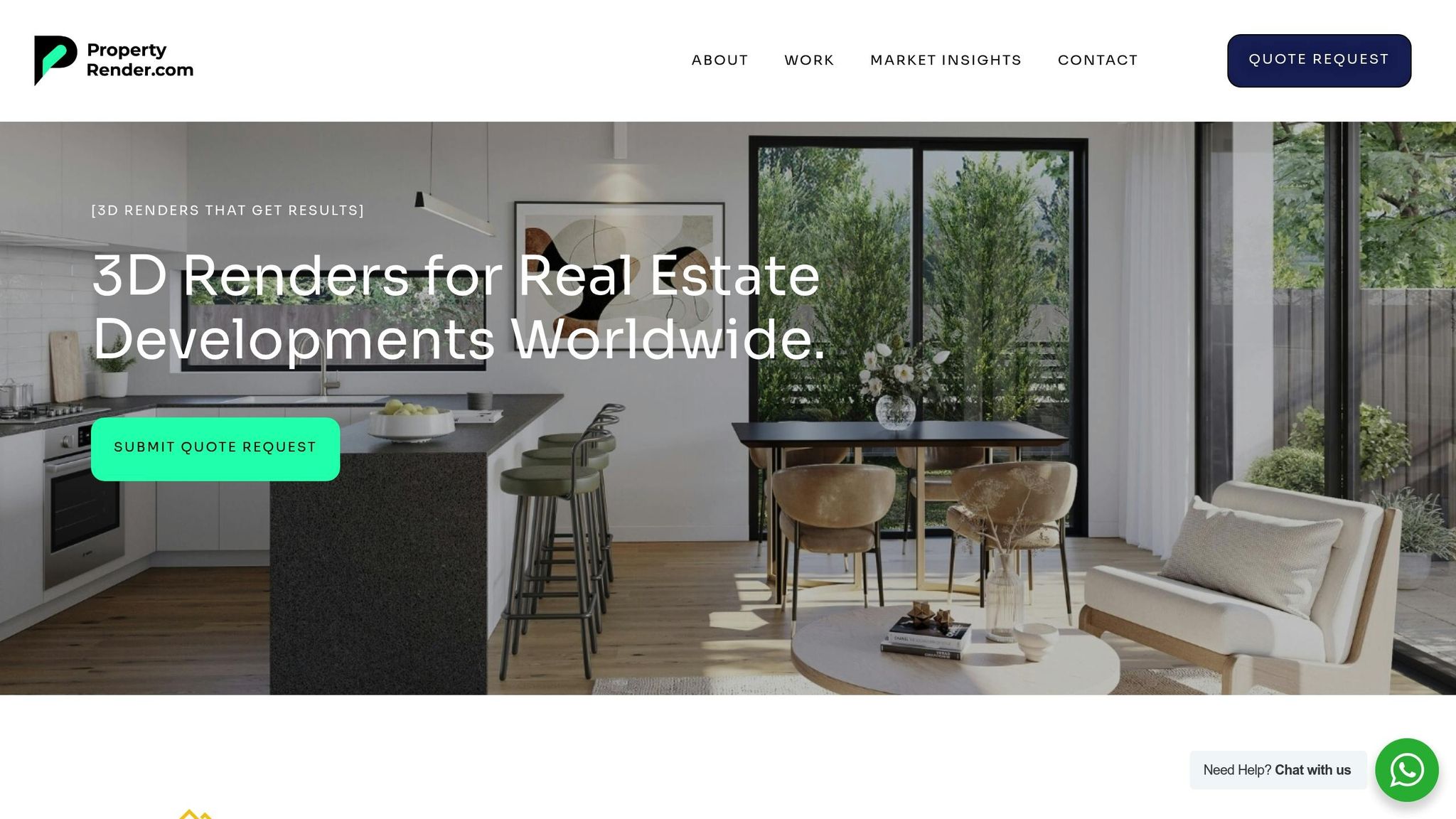
Property Render specializes in 3D architectural visualization, catering to developers and real estate professionals who need high-quality marketing materials for off-the-plan sales. Their services cover a wide range of visualization needs, ensuring every aspect of a property is captured effectively.
Their offerings include:
- Interior and Exterior Renders: Highlighting the design and layout of spaces, both inside and out.
- Aerial and Streetscape Renders: Providing a broader view of the property’s surroundings and neighborhood context.
- Site and Floor Plan Renders: Offering clear visuals of property positioning, room dimensions, and flow for better spatial understanding.
For an immersive experience, their virtual walkthroughs let potential buyers navigate properties as if they were physically there. These tours integrate seamlessly with CORE Virtual Realty Tours, creating a comprehensive digital showing experience.
To simplify marketing efforts, Property Render offers bundled packages that combine various visualization types. This ensures visual consistency across all promotional materials and caters to different buyer preferences. They also provide two levels of rendering services: Standard Renders for basic approval processes and Premium Renders for high-end marketing campaigns that require photorealistic visuals.
By focusing on quality and aligning with local expectations, Property Render ensures its services meet the unique demands of the US real estate market.
Meeting US Standards and Requirements
Property Render tailors its solutions to the US market by adhering to local standards and conventions. Their renders use imperial measurements, US dollars, and reflect common real estate practices, ensuring accuracy and relevance.
The company’s attention to US building codes and architectural standards ensures that structural details, room layouts, and exterior features align with local construction practices. This level of precision helps buyers connect with the properties they’re viewing, offering a clearer understanding of what’s being presented.
US buyers expect premium digital experiences, and Property Render delivers with photorealistic renders that rival professional photography in quality and detail. Additionally, their virtual tours are designed to work seamlessly across different devices and internet speeds, ensuring accessibility for all users.
sbb-itb-e3e39b4
How to Integrate 360° Virtual Tours and 3D Renders
Incorporating 360° virtual tours and 3D renders into your pre-sales strategy requires thoughtful planning and execution. To make the most of these tools, you’ll need to focus on showcasing the right spaces, collaborating effectively with visualization providers, and ensuring that your content is accessible across various platforms. Here’s how to make it work.
Planning and Selecting Key Spaces to Showcase
Choosing the right spaces to highlight can significantly impact potential buyers. For residential properties, focus on areas like master bedrooms, kitchens, and living spaces – places that buyers care about the most. In commercial properties, reception areas and primary workspaces often leave the strongest impression.
Plan the navigation experience carefully. Create a flow that feels natural, as if someone is walking through the property in person. Mark specific viewpoints on floor plans and turn them into interactive navigation points. For larger properties or developments with multiple units, prioritize the spaces that will make the biggest impression to stay within your budget and timeline.
"A strategic plan clearly demonstrates the property’s potential." – xpressrendering.com
Tailor your selections to align with what your target audience values most, ensuring the property’s appeal stands out.
Working with Visualization Providers
Collaboration is key when working with visualization providers. Share detailed information such as floor plans, elevations, layouts, and lighting designs. Companies like Property Render, mentioned earlier, work closely with developers to ensure the visuals align with marketing goals.
Be upfront about the project scope and budget. Decide whether you need standard renders for general marketing or premium renders for luxury campaigns. Clear communication will help ensure the final product meets your expectations.
Adding to Marketing Campaigns
Maximize the reach of your virtual tours by integrating them into your marketing efforts. Embed them on property listing pages and dedicated landing pages. Use teaser clips and high-quality visuals on social media and in email newsletters to grab attention. For print materials, include QR codes that link directly to the virtual tours, making it easy for potential buyers to access them instantly.
Making Content Accessible Across Devices
Your virtual tours should work seamlessly on all devices, including smartphones, tablets, desktop computers, and VR headsets. Optimize for fast loading, smooth navigation, and interactive features that adapt to different platforms.
To cater to varying internet speeds, use progressive loading and offer quality options. For an even more immersive experience, ensure compatibility with VR platforms when it suits your audience.
Impact on Sales Performance and Client Satisfaction
Beyond enhancing engagement and streamlining processes, visualization tools like 360° virtual tours and 3D renders are driving measurable improvements in sales performance and client satisfaction.
Improving Sales Speed and Conversion Rates
Immersive experiences are transforming how properties are marketed, speeding up sales and boosting conversion rates. Buyers can now pre-qualify their interest online, which means fewer in-person visits and faster decision-making. This efficiency often leads to quicker sales.
By reaching a broader audience – including out-of-state and international buyers – these tools help create competitive bidding scenarios, which can benefit sellers significantly. Remote buyers, in particular, gain instant access to detailed property views, making it easier for them to make informed decisions.
For properties still under construction, 3D renders are a game-changer. They allow potential buyers to visualize completed spaces, enabling developers to secure sales even before the project is finished. This early commitment can be a critical advantage in hitting sales targets.
Increasing Buyer Satisfaction and Transparency
When buyers feel informed, their overall experience improves. Virtual tours give them the freedom to explore every nook and cranny of a property, setting realistic expectations and reducing the chances of post-purchase regret.
These tours also build trust by offering a level of transparency that static photos simply can’t match. Buyers can see room dimensions, natural lighting, and how spaces flow together – all of which help them make more confident decisions.
Accessibility is another key factor. Virtual tours provide an inclusive way for elderly buyers, individuals with mobility challenges, or busy professionals to evaluate properties without the hassle of physical visits. This thoughtful approach not only broadens the potential buyer pool but also demonstrates consideration for diverse needs.
In the case of new construction, 3D renders allow buyers to see how their future home could look with different finishes, furniture arrangements, and lighting options. This clarity reduces the likelihood of costly change orders or delays, while also boosting buyer confidence. Satisfied buyers, in turn, enhance your brand’s reputation in the market.
Building Brand Credibility and Innovation
Adopting advanced visualization tools doesn’t just improve sales – it elevates your brand. Developers and real estate professionals who embrace these technologies position themselves as forward-thinking leaders in the industry. This appeal resonates with tech-savvy buyers and highlights a commitment to modern, effective marketing strategies.
Unlike traditional photography, immersive presentations leave a lasting impression. They help properties stand out, especially when buyers are comparing similar options. High-quality virtual tours and 3D renders reflect high standards in both construction and customer care, building trust from the outset.
Additionally, when buyers share these immersive experiences with others, your brand gains exposure to a broader audience. Developers who use these tools also attract valuable partnerships, as architects, contractors, and investors recognize the marketing edge that comes with innovative property presentations.
The Future of Real Estate Marketing with 360° Virtual Tours and 3D Renders
The real estate industry is undergoing a major transformation, with immersive marketing technologies becoming a cornerstone of pre-sales strategies. These tools are reshaping how properties are showcased, building on the engagement trends already reshaping the market.
Developers have noticed that properties presented using immersive visualization methods often capture greater buyer interest. This added engagement translates into faster sales and higher conversion rates, making these technologies a game-changer for the industry.
As technology advances, the immersive experience is set to become even more dynamic. A mobile-first approach is now essential. With smartphones becoming more powerful, virtual tours and 3D renders must be designed to work seamlessly on mobile devices. This ensures that busy professionals, remote buyers, and international investors can explore properties on the go, anytime and anywhere.
These innovations don’t just enhance the buyer experience – they also position developers and real estate professionals for success. Early adopters of 360° virtual tours and 3D renders can secure a competitive edge in an increasingly digital marketplace. By making these tools a core part of their marketing strategy, they can stand out to tech-savvy buyers.
What’s more, these technologies have become more affordable while maintaining high-quality results. Developers can now combine interior and exterior 3D renders with virtual walkthroughs to create comprehensive marketing packages that address every stage of the buyer journey.
One of the biggest advantages of immersive technology is its ability to speed up decision-making. When buyers can virtually explore a property in detail – even before it’s built – they feel more confident in their investment. This benefits developers by accelerating pre-sales and reassures buyers about their choices.
As immersive tools continue to evolve, the divide between forward-thinking innovators and those sticking with traditional methods will only grow. The real question isn’t whether to adopt these technologies, but how quickly you can integrate them into your strategy to remain competitive in this increasingly digital landscape.
FAQs
How can 360° virtual tours and 3D renders improve the pre-sales process for real estate developers?
360° virtual tours and 3D renders are game-changers in the pre-sales process, offering immersive, lifelike experiences that allow potential buyers to picture properties long before construction begins. These tools not only grab attention but also help buyers make decisions faster while feeling more confident about their choices.
By presenting detailed views of properties that don’t yet exist, developers can spark early interest and even secure more competitive offers. Homes marketed with 3D tours often sell quicker and at higher prices, making these technologies a smart investment for driving sales and enhancing customer satisfaction.
How can 360° virtual tours and 3D renders be effectively used in real estate marketing?
To make the most of 360° virtual tours and 3D renders in real estate marketing, aim to create an experience that draws viewers in and showcases the property’s standout features. Thoughtful planning of layouts and viewpoints is key – it should feel effortless for potential buyers to navigate and picture themselves in the space.
Interactive touches, like clickable floor plans or hotspots, can take the experience up a notch. These features not only keep buyers engaged but also give them a clearer understanding of the property. Plus, incorporating these tools early in the design process can simplify collaboration, cut down on revisions, and speed up decisions. Whether you’re presenting a finished property or one still in the works, these tools can make a big difference.
How do 360° virtual tours and 3D renders help international or remote buyers, and how does this impact sales?
360° virtual tours and 3D renders have transformed the way international and remote buyers explore properties. These tools allow potential buyers to experience properties in remarkable detail, all without stepping foot inside. From examining the layout to getting a feel for the space, these virtual experiences bring properties to life.
By eliminating geographical barriers, these technologies not only capture buyers’ attention but also help them make decisions faster. Homes showcased with virtual tours and 3D renders often sell quicker and draw interest from a wider pool of buyers, making it easier for sellers to connect with motivated prospects.


