


Want to sell properties faster and attract more buyers? High-quality 3D property renderings are transforming real estate marketing. Here’s why they matter:
- Boost Inquiries: Listings with 3D renderings get up to 40% more inquiries compared to traditional photos.
- Faster Sales: Properties with renderings sell up to 30% faster, reducing holding costs and speeding up deals.
- Pre-Sales Advantage: Developers can sell units before construction begins – one project sold 65% of units using only 3D assets.
- Better Visualization: Buyers can explore spaces virtually, making it easier to understand layouts and design potential.
- Emotional Appeal: Realistic details help buyers imagine themselves living in the property, driving quicker decisions.
3D renderings are not just visuals – they’re tools that drive sales, improve buyer confidence, and make your listings stand out in a competitive market. Whether you’re marketing new developments, renovations, or pre-construction projects, these renderings are a game-changer.
Turn Builder Blueprints into $$$ | 3D Renders & Floor Plans for Real Estate Success!
Key Benefits of High-Quality Property Renderings
Top-tier 3D renderings offer real, measurable advantages in the real estate world. They change how buyers view properties and give agents and developers a distinct edge in a competitive market.
Better Visualization for Buyers
Traditional 2D floor plans can only go so far. In contrast, 3D floor plans provide an immersive experience, whether it’s a cozy 1,200 sq ft condo or a sprawling 3,500 sq ft family home.
"3D floor plans are revolutionizing the real estate industry by providing a clear, engaging way to showcase properties to potential buyers." – OMEGARENDER
These renderings allow buyers to virtually explore spaces, making it easier to understand room layouts, flow, and spatial relationships. This is especially helpful for properties still under construction. On top of that, 3D renderings can replace traditional photo shoots by offering lifelike images of both interiors and exteriors before they even exist. This minimizes guesswork and streamlines the marketing process.
But it’s not just about clarity – these visuals evoke emotions, which can make all the difference.
Building Emotional Connections
A well-crafted 3D rendering can do more than showcase a property – it can make buyers feel connected to it. Small, thoughtful details like a steaming coffee cup on the counter or lifelike textures in the furniture help buyers imagine themselves living there.
"With 3D property visualization, real estate marketing and presentation tools have taken a giant leap forward, enhancing property showcasing of future projects in a more engaging and immersive way." – RNDR
When buyers can picture themselves enjoying their morning coffee or hosting loved ones in a beautifully rendered living room, they’re more likely to make quicker decisions and feel committed to the property.
Standing Out in a Competitive Market
In crowded real estate markets, standing out is everything. High-quality 3D renderings combine visual clarity and emotional appeal to make listings shine. In fact, U.S. properties with digital renderings can see up to 40% more inquiries. These photorealistic visuals grab attention instantly, helping properties stand out on digital platforms. As one expert put it:
"By showcasing properties in the best light, 3D renderings attract more attention and leave a lasting impression. This professional presentation helps properties stand out, increasing interest and the chances of a sale." – Blinqlab Direct
Compared to traditional photos or 2D illustrations, 3D renderings spark greater interest. They also position agents as forward-thinking professionals. Plus, creating 3D floor plans is not only faster but also more affordable than traditional photography, with costs ranging from $300 to $900 per plan. This investment often pays off by generating more inquiries and speeding up sales cycles.
Techniques for Creating Effective Property Renderings
Creating property renderings that resonate with American buyers requires a mix of technical skill and an understanding of regional design preferences.
Achieving Photorealism
Photorealistic renderings hinge on getting the details just right. Balanced lighting, realistic shadows, and authentic material textures are essential for creating depth and believability. For instance, materials like wood should showcase natural grain patterns, marble should display subtle veining, and carpets need to have realistic textures. All surfaces should respond naturally to light, whether reflecting or absorbing it. Proportions are equally critical – door heights typically range from 6’8" to 8′, kitchen counters are generally 36 inches high, and modern ceilings often stand between 9 and 10 feet.
The environment around the property also plays a big role in realism. Including mature landscaping, nearby structures that reflect the local character, and natural elements like trees or water features can ground the rendering in its setting. Fine details, such as reflections on windows, slight color variations in materials like stone or brick, and signs of wear, can elevate a rendering from ordinary to extraordinary. Advanced touches like adding asymmetry, using blurred backgrounds to suggest depth of field, or introducing slight color aberrations can make the image feel more lifelike.
These techniques combine to create visuals that not only look realistic but also align with regional architectural styles.
Matching Local Preferences
Architectural tastes in the U.S. vary widely by region, and effective renderings should reflect these differences. For example, homes in the South often feature tall windows, high ceilings, and spacious porches designed for outdoor living and shade. In contrast, Northeastern homes are built with durability in mind, often showcasing symmetrical designs, steep roofs to handle snow, and central chimneys. Western homes frequently emphasize indoor-outdoor living, with large sliding doors, outdoor kitchens, and layouts designed to capture natural light and scenic views.
Cultural influences further shape these preferences. Colonial-style homes might incorporate European design elements, while Mid-Century Modern homes often draw on minimalist, Japanese-inspired aesthetics. Budget also impacts design choices – a $300,000 home in Ohio will have very different finishes and landscaping compared to a $2 million custom home in California.
Adding Interactive Elements
Interactivity takes renderings to the next level, offering buyers a more engaging and immersive experience. Features like virtual tours and 360° panoramas allow potential buyers to explore spaces as if they were physically there. Interactive floor plans with clickable hotspots can provide detailed information, such as room dimensions or material specs, without overwhelming the main image.
Real-time updates ensure that all stakeholders stay aligned with the latest design changes, which is especially useful as plans evolve. Additional elements like aerial views and site plans can highlight nearby amenities, such as schools, shopping centers, or transit options, giving buyers a better sense of the property’s surroundings. Investing in these interactive tools can lead to faster sales and higher conversion rates; for example, the UNCTAD Digital Economy Report 2021 found that 3D virtualization and digital marketing increased product sales by 13%.
sbb-itb-e3e39b4
Using Renderings in Your Marketing Strategy
When used thoughtfully, property renderings can become a game-changer for your sales strategy. The secret is knowing how to deploy these visuals to make the biggest splash.
Improving Online Listings
Top-notch renderings can elevate your online listings, making them stand out in a crowded market. Properties with impressive 3D images often see a surge in inquiries and interest, and listings featuring these visuals can sell up to 50% faster compared to those without them.
Renderings also improve search engine performance. High-quality 3D visuals and virtual tours not only captivate potential buyers but also increase user engagement. For instance, Facebook posts with images see 2.3 times more engagement. When buyers spend more time browsing your listings, search algorithms take notice and reward you with better visibility. Virtual tours, in particular, allow buyers to explore properties at their own pace, driving deeper interest and interaction.
But the benefits of renderings extend far beyond online visibility – they can redefine how you approach pre-sales.
Maximizing Pre-Sales Opportunities
Pre-sales are one of the most impactful ways to use property renderings. They give developers the chance to secure buyers and funding before construction even begins. Take Hudson Yards in New York as an example: this $25 billion project sold over 60% of its units during pre-sales, largely thanks to detailed interior and exterior renderings and virtual walkthroughs. These visuals help bridge the gap between concept and reality, giving buyers a chance to explore their future homes before they’re built.
"3D Visualization Triggers Excitement that Builds Anticipation!" – BluEntCAD
The psychological power of renderings is undeniable. They help buyers picture themselves in a space, making the decision-making process easier. What’s more, renderings that include customization options – like different color schemes, flooring, or kitchen layouts – help buyers connect emotionally with a property.
Renderings also foster trust. They provide clear, realistic expectations, reducing uncertainty and minimizing misunderstandings.
"Real estate is never just about square footage. It’s about lifestyle, aspirations, and emotion. Photorealistic renderings tap into that by presenting a complete narrative." – Sarasota Magazine
When paired with early bird incentives and showcased across websites, social media, and brochures, renderings create a cohesive marketing campaign that resonates with buyers at every stage of their journey. This approach not only boosts interest but also ensures your marketing strategy is consistent and impactful.
Beyond pre-sales, renderings also shine when marketing renovation opportunities.
Highlighting Renovation Potential
Selling renovation properties comes with its own set of challenges, but renderings can make all the difference. Before-and-after visuals give buyers a clear picture of what’s possible, especially for properties needing significant updates. Virtual renovations can highlight potential improvements, tailored to reflect current design trends or appeal to specific buyer groups. For example, one buyer might prefer a traditional look, while another leans toward a sleek, modern style – renderings can cater to both.
These visuals also help clarify the financial benefits of renovations. For instance, vinyl siding updates can recover 82% of their cost when effectively visualized, helping buyers see the value in proposed upgrades. Renderings can spotlight ROI-focused improvements like energy-efficient windows or upgraded countertops, making the case for investment crystal clear.
Virtual staging takes it a step further, using stylish furniture and layouts to help buyers imagine the space as their own. Highlighting premium finishes such as hardwood floors or luxury countertops in renderings can also emphasize the property’s potential.
The impact doesn’t stop at individual showings. Listings with virtual tours attract 87% more views than those without, broadening the audience for renovation properties. This is especially important for homes that might otherwise be passed over by buyers unable to see past their current condition. Dramatic before-and-after comparisons of key areas like kitchens and bathrooms can help create a compelling marketing strategy that focuses on transformation and potential rather than limitations.
Why Choose Property Render for Your Visualization Needs
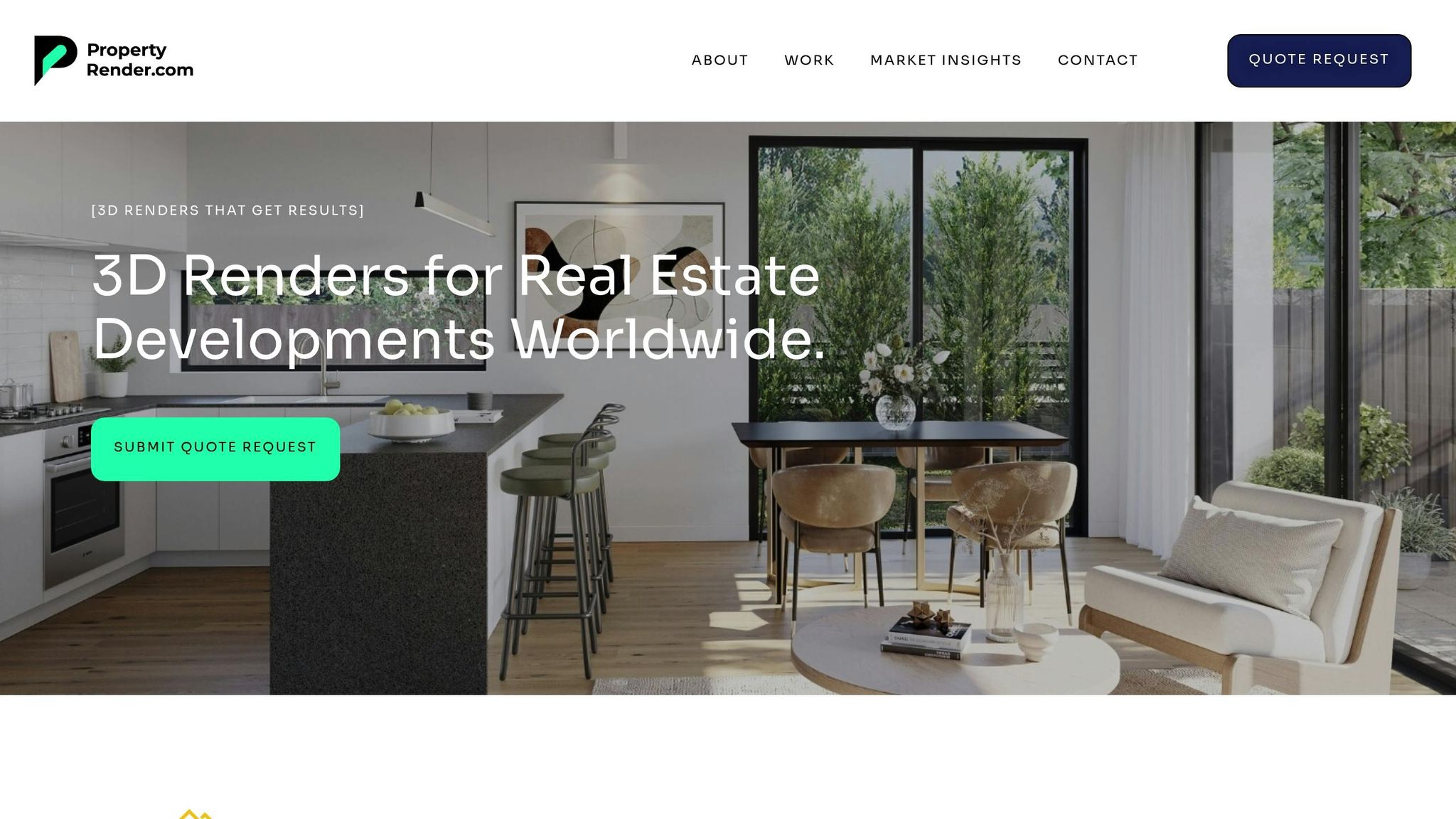
When it comes to elevating your property marketing game, choosing the right visualization partner is key. Property Render specializes in 3D visualization services tailored for U.S. real estate professionals. With 80% of buyers stating they’d prefer agents offering 3D tours, teaming up with a provider like Property Render helps keep you ahead in today’s competitive market.
Comprehensive Rendering Services
Property Render delivers a full suite of visualization solutions designed to meet all your property marketing needs. Their offerings include interior and exterior renders, aerial views, streetscape visuals, virtual walkthroughs, and detailed site plans. This means you don’t have to juggle multiple providers – everything you need is available in one place.
Their 3D rendering services are particularly useful for showcasing properties before they’re built or renovated, making them ideal for new developments or unfinished projects. For example, aerial renders highlight a property’s location, boosting buyer confidence, while streetscape renders show how new developments integrate into existing neighborhoods.
Additionally, Property Render specializes in photomontage renders and CORE Virtual Realty Tours. These immersive experiences allow buyers to explore properties remotely, which is especially valuable for out-of-state clients or investors who can’t visit in person. This expanded reach can significantly enhance your marketing efforts.
Tailored Marketing Packages
Understanding that every project has unique needs, Property Render offers custom marketing packages designed for pre-sale campaigns and off-the-plan marketing. These packages combine different visualization types – like photorealistic renders, virtual walkthroughs, and floor plans – into a cohesive set of materials that work across platforms, from online ads to printed brochures.
These tailored packages are particularly effective for showcasing unbuilt developments, helping buyers visualize future projects and setting realistic expectations. By bridging the gap between concept and reality, these materials enhance client satisfaction and improve pre-sales performance. Plus, the streamlined approach ensures your marketing efforts remain efficient and effective.
Simplified Visualization Process
Property Render makes it easy to access high-quality renderings without the hassle of managing multiple vendors or mastering specialized software. Their 3D visualization services transform complex architectural plans into easy-to-understand visuals, handling every step of the process so you can focus on your business.
Outsourcing to Property Render is also more cost-effective than maintaining in-house expertise. It eliminates the need for expensive software and hardware, saving both time and resources. They offer two levels of service: Standard Renders for basic approval needs and Premium Renders for high-quality marketing visuals. This flexibility ensures you get the right level of detail for your budget and timeline.
Beyond creating stunning visuals, Property Render understands the power of 3D renderings in driving buyer decisions. Their realistic, detailed images help potential buyers connect emotionally with properties, speeding up decision-making and boosting conversion rates.
With the global 3D imaging market expected to hit $5.63 billion by 2025, investing in professional visualization services like those offered by Property Render positions your business for success in an increasingly visual world.
Conclusion: Improving Your Real Estate Marketing with Quality Renderings
In today’s real estate market, high-quality property renderings have become a game-changer. Listings that include 3D renderings see up to 40% more inquiries, and over 85% of buyers say these visuals help them imagine properties as their future homes. This approach not only boosts buyer interest but also gives you a competitive edge.
3D renderings allow potential buyers to explore properties even before construction begins, speeding up decision-making and shortening the sales cycle.
"Photorealistic 3D architectural visualizations are an investment that significantly increases the value and attractiveness of a project. They’re not just beautiful images but a powerful tool that builds emotions, attracts clients, and supports the sales process." – RendPro
The impact of these visuals goes beyond just pretty pictures. They integrate seamlessly into your marketing efforts – from enhancing online listings to driving pre-sales and showcasing renovation possibilities. Whether used on websites, social media, brochures, or virtual tours, 3D renderings elevate your property’s appeal. With nearly 80% of buyers and sellers preferring agents who offer immersive 3D tours, investing in professional rendering services positions you as a leader in the market.
Every detail – from lifelike visuals to interactive tools – works to captivate and engage clients. Partnering with companies like Property Render simplifies the process by providing end-to-end solutions. Their tailored packages and streamlined services let you focus on what matters most – closing deals and growing your portfolio – while leveraging stunning visuals to attract and convert more leads.
In a market driven by visuals, quality renderings forge emotional connections that turn interested prospects into committed buyers and make your listings truly stand out.
FAQs
How do 3D property renderings help potential buyers feel more connected to a property?
3D property renderings have a special way of drawing people in by letting them explore a space as if they were right there. These incredibly realistic visuals help potential buyers picture themselves living in the home, creating a sense of comfort and familiarity.
By highlighting every nook and cranny, from unique architectural details to the overall layout, these renderings make it easier for buyers to imagine how the property could suit their daily lives. This personal connection often plays a big role in guiding their decision to take the next step toward making a purchase.
How does the cost of 3D property renderings compare to traditional real estate photography?
The price for 3D property renderings in the U.S. can vary widely, ranging from $50 to $10,000 per image, depending on the level of detail and quality required. Most standard projects tend to cost around $400 per rendering, while ultra-realistic, high-end visuals can climb to the top of that range. In contrast, traditional real estate photography typically falls between $150 and $500 per shoot, influenced by factors like the package chosen and the location.
While 3D renderings might seem more expensive initially, they come with notable perks. They allow for scalability and flexibility, letting you make updates without the need for additional photo shoots. Over time, these features can translate into cost savings and offer tailored solutions, making 3D renderings an effective tool for presenting properties.
How can real estate agents use 3D renderings to boost client interest and drive pre-sales?
Real estate agents have a game-changing tool at their disposal: 3D renderings. These highly detailed, lifelike visuals allow agents to present properties in a way that feels both immersive and engaging. Whether used in online listings, virtual tours, or social media campaigns, 3D renderings help potential buyers picture themselves in a home – even if that home hasn’t been built yet.
What makes 3D renderings so effective? They highlight essential details like layouts, unique features, and design possibilities, making properties stand out and resonate with a wider audience. Plus, by analyzing how buyers interact with these visuals, agents can uncover valuable insights about preferences and interests. This data can then inform smarter marketing strategies, ultimately boosting pre-sales success.


