


Virtual tours are reshaping how buyers evaluate properties. They don’t just showcase homes – they immerse buyers in them. Listings with 3D tours:
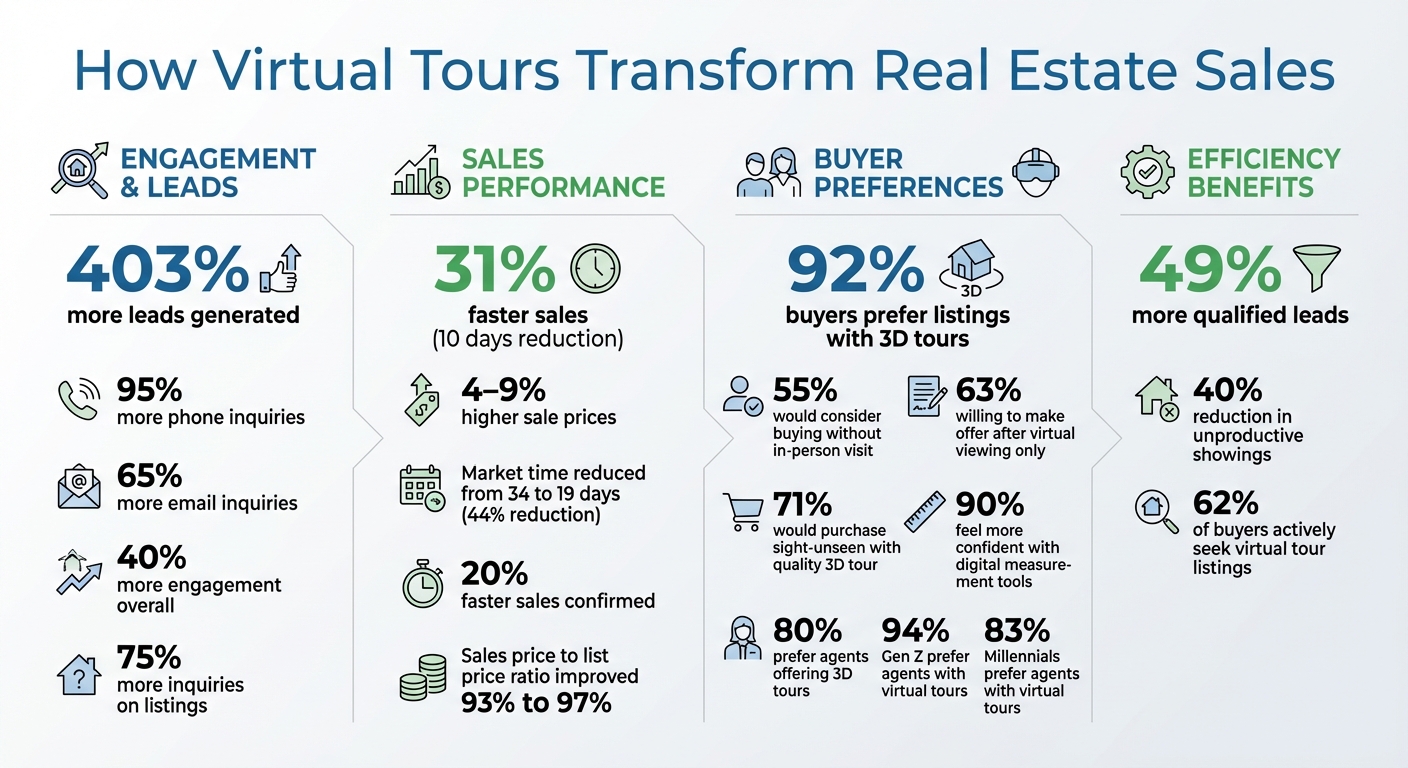
- Attract 40% more engagement and 75% more inquiries.
- Sell for up to 9% higher prices and 31% faster.
- Reduce average market time from 34 days to 19 days.
These tours build trust by offering a realistic view of homes, with tools like digital measurements and interactive layouts boosting buyer confidence. Nearly 92% of buyers prefer listings with 3D tours, and 55% would consider purchasing without an in-person visit. For agents, virtual tours save time by filtering out unqualified leads and driving interest from serious buyers.
Property Render enhances this experience with features like dollhouse views, narrative voiceovers, and hotspot interactivity. These tools help buyers visualize spaces and understand property details better, especially for off-the-plan sales.
Virtual tours are no longer optional – they’re a must-have for modern real estate marketing.
Virtual Tours Impact on Real Estate Sales: Key Statistics and Benefits
Research Findings on Virtual Tours and Buyer Engagement
Higher Buyer Interest and Engagement Numbers
Properties that include 3D virtual tours see a huge boost in buyer interest. In fact, these properties generate 403% more leads, 95% more phone inquiries, and 65% more email inquiries compared to those without virtual tours. Researchers Kelley Anderson and K.T. Manis from Texas Tech University studied 143,575 MLS listings across four U.S. markets between November 2016 and November 2019. Their analysis showed that homes with 3D tours – 90% of which used Matterport – sold up to 31% faster in the Southern market and fetched prices that were 4–9% higher.
Another study, focused on 700 listings in a major Southern U.S. market between March 2018 and July 2019, confirmed these findings. Homes with 3D digital twins sold 20% faster and at prices 4.8% higher than their counterparts without this feature. These numbers make it clear: virtual tours don’t just grab attention – they drive faster sales and better financial outcomes.
Faster Sales and Better Conversion Rates
Virtual tours are also a game-changer when it comes to speeding up the sales process. Jay Acker from the Real Estate by Design Group (Keller Williams Realty) shared how adopting 3D tours significantly impacted his business.
"We saw our average days on market drop from 30 to 21 days and our average sales price to list price jump from 93 to 97% within a six month window."
- Jay Acker, Real Estate by Design Group, Keller Williams Realty
This kind of efficiency is especially important as more buyers turn to online platforms – 52% of homeowners now find their homes online. Additionally, features like floor plans make a big difference. Eight out of ten buyers say they’re more likely to schedule a physical showing when a floor plan is included in the listing.
Effects on Buyer Confidence and Emotional Connection
Virtual tours do more than just speed things up – they build trust. Unlike staged photos that can hide flaws or exaggerate features, 3D walkthroughs provide a true-to-life view of the property.
"With VR, sellers cannot exaggerate positive features or downplay the flaws of a property to attract buyers. The product information conveyed through VR is a more truthful reflection of a property’s product quality."
- Study Authors, Information Systems Research
This transparency resonates with buyers. An impressive 92% of prospective buyers say they’re more likely to purchase a home when a 3D tour is available, and 55% would even consider buying sight-unseen if they could explore the property virtually. Interactive features, like the ability to take digital measurements, further enhance buyer confidence – 90% of buyers report feeling more assured when these tools are available.
It’s no surprise, then, that 80% of buyers and sellers would prefer working with a real estate agent who offers immersive 3D tours. Among younger generations, the numbers are even higher: 94% of Gen Z and 83% of Millennials say they’d make the switch. Virtual tours aren’t just a perk – they’re quickly becoming a must-have in the real estate world.
sbb-itb-e3e39b4
How Narrative-Driven Virtual Tours Influence Buyer Psychology
Storytelling and Immersive Experiences
Virtual tours that weave storytelling into their design create a sense of "transportation", a mental state where buyers become fully absorbed in the narrative. Studies reveal that this immersive experience not only enhances positive feelings about the property but also elevates the overall viewing experience. While "telepresence" helps buyers feel as though they’re physically in the space, it’s the narrative elements – like describing a lifestyle or providing insights about the neighborhood – that truly spark emotional connections and encourage persuasive outcomes.
This immersive environment often triggers feelings of pleasure and excitement, emotions closely tied to a stronger intent to purchase. By using narrative-driven tours, potential buyers can begin to picture their lives unfolding in the home, which reduces uncertainty and helps them make decisions more quickly. Chen Chen from the University of Illinois highlights an interesting effect: while deep narrative immersion can enhance positive emotions, it might also make it harder for buyers to recall specific details – like square footage – because their attention shifts to the overall experience. Even so, these narratives naturally encourage buyers to engage with the property’s features in a meaningful way.
Interactive Features and Decision Confidence
Interactive features take the immersive experience a step further by boosting buyer confidence. Virtual walkthroughs provide what experts call "location intelligence", offering buyers a clear sense of the property’s flow, layout, and dimensions. This transparency ensures buyers get an accurate view of the home, reducing the chance for sellers to overstate its strengths or hide flaws.
Features like digital measurement tools, which let buyers virtually measure rooms, walls, and windows, are a game-changer. Nearly 90% of buyers say these tools significantly increase their interest in a listing. Additionally, virtual tours step in when real estate agents aren’t readily available, offering detailed property insights that help buyers make well-informed decisions. This interactive, self-guided approach leads to 49% more qualified leads, as many prospective buyers have already "visited" the home virtually before setting foot in it.
Economic Effects of Virtual Tours on Property Sales
Effects on Sale Prices
Virtual tours have a mixed impact on final sale prices, depending on various factors. A study conducted by Harvard Business School, which analyzed 75,178 home sales in Los Angeles from March 2019 to March 2021, revealed some intriguing insights. When photo and text quality were accounted for, virtual tours showed an "insignificant" effect on final sale prices. However, without these controls, homes with virtual tours saw a modest 1.1% price increase.
For lower-priced, owner-occupied homes, the influence of virtual tours is more pronounced. These properties tend to sell at a 7.25% higher price when sold quickly. On the flip side, listings that linger on the market for 60 days experience a 4.8% price drop.
"VR is not increasing the home’s value. It’s a tool to show you how the house looks." – Dr. Zixuan "Maggie" Meng, Assistant Professor, University of Texas at Dallas
Virtual tours prove especially useful for "difficult-to-show" properties, such as those still occupied by owners or tenants. They help overcome the logistical challenges of in-person showings. However, for vacant homes that are easy to view in person, virtual tours show no significant effect on sale prices. Their primary role is informational, allowing buyers to evaluate properties more efficiently rather than directly increasing bids. While their effect on sale prices varies, virtual tours consistently contribute to shorter market times.
Shorter Time on Market
One of the most consistent benefits of virtual tours is their ability to reduce the time a property spends on the market. A study of nearly 43,000 properties found that virtual tours cut the average listing time from 34 days to 19 days, a reduction of approximately 44%.
Additional data supports this trend. Properties with 3D virtual tours sell 31% faster, shaving roughly 10 days off their market time. This efficiency stems from the technology’s ability to provide a realistic representation of the property, helping serious buyers make quicker decisions while filtering out those who are less interested. Virtual tours reportedly reduce unproductive showings by about 40%, saving time for both agents and buyers.
The time-saving advantages are particularly noticeable for newer, larger, and more spacious homes. These properties benefit from the enhanced visibility and streamlined decision-making process that virtual tours offer. In fact, a Redfin study found that 63% of homebuyers were willing to make an offer on a property they had only viewed through virtual tools. This shift in buyer behavior underscores why virtual tours are now a sought-after feature, with 62% of buyers actively looking for listings that include immersive experiences.
How Property Render Improves Virtual Tour Experiences
CORE Virtual Realty Tours and Interactive Walkthroughs
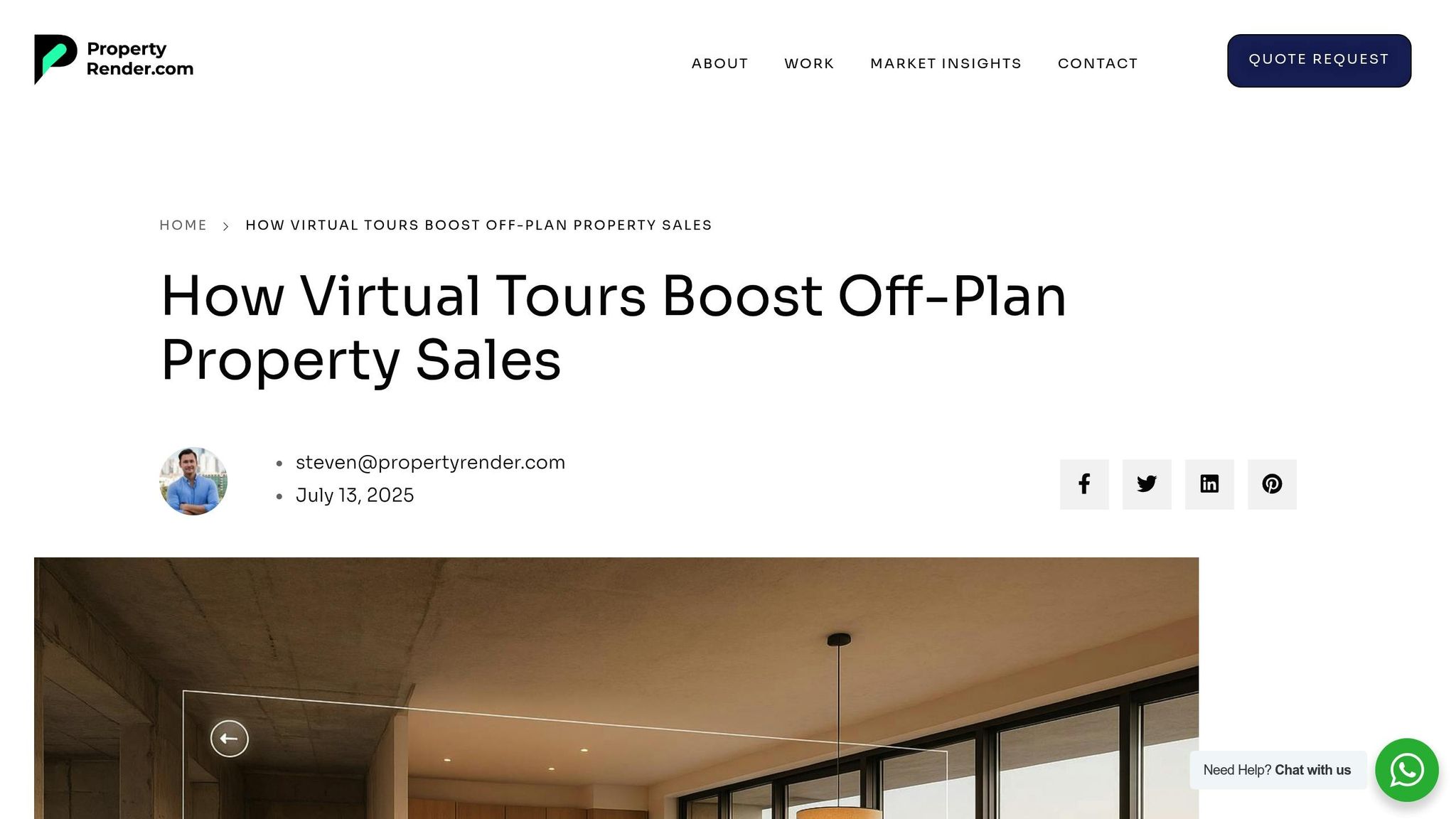
Property Render’s CORE Virtual Realty Tours combine lifelike 3D visuals with storytelling techniques to deliver more than just a simple property walkthrough. These tours include interactive hotspots, allowing potential buyers to click on specific areas to explore materials, finishes, and layout options. This transforms property details into an engaging, interactive experience that feels personal and informative. Additionally, the platform highlights nearby points of interest, providing walking or driving distances to key amenities. This added layer of information paints a fuller picture of the lifestyle a property offers.
For off-the-plan sales, where buyers must imagine spaces that don’t yet exist, this technology is a game-changer. Through 3D storytelling, Property Render brings unbuilt projects to life. Instead of relying solely on static descriptions, the tours include narrative voiceovers that spotlight standout features – like a chef’s kitchen or striking architectural elements. These voiceovers help buyers visualize how they might live in the space, making the experience more relatable and emotionally engaging. This approach is particularly effective for properties under development, where visualization is key.
The 3D walkthroughs also feature dollhouse views, offering a complete layout of the property. Integrated measurement tools allow buyers to measure rooms, walls, doors, and windows remotely – an option that 60% of users prioritize when evaluating properties. These interactive features provide what experts call "location intelligence", delivering a deeper, more emotional connection to the property compared to static images.
Complete Marketing Solutions for Real Estate
Beyond creating immersive virtual tours, Property Render amplifies buyer engagement through comprehensive marketing solutions. Their marketing packages combine interior and exterior renders, aerial and streetscape views, site plans, and virtual walkthroughs into cohesive materials. This ensures that buyers experience consistent visual storytelling across all stages – from initial marketing to final tours.
The foundation of these solutions lies in photorealistic architectural renders, which are carefully designed to showcase properties in their best light while staying accurate. By blending static renders with interactive 3D environments, Property Render delivers tools that streamline the sales process and address buyer concerns. For instance, 78% of buyers worry that photos may be misleading or manipulated, but Property Render’s approach builds trust by providing detailed and interactive visuals. These tools not only meet buyers’ needs for transparency but also help properties sell faster by offering a more engaging and informative experience.
How to Get More Sales using 360 Virtual Tours
Conclusion
Virtual tours are reshaping the way buyers approach property decisions. Homes featuring 3D walkthroughs tend to sell faster, fetch higher prices, and attract more leads and qualified buyers compared to those without this technology. In fact, a striking 92% of prospective buyers are more inclined to purchase a home that includes an immersive 3D tour, highlighting how this tool has become a game-changer in real estate marketing. Beyond these numbers, virtual tours foster trust by helping buyers form a stronger emotional connection to properties.
One of the biggest advantages of virtual tours is how they allow buyers to evaluate a property’s suitability early in their search. This minimizes wasted time on homes that don’t meet their needs and deepens their attachment to ones that do. For off-the-plan sales – where buyers are considering properties that haven’t been built yet – this visualization capability is even more critical.
Property Render takes this concept further by offering photorealistic renders and interactive walkthroughs equipped with features like measurement tools, dollhouse views, and narrative storytelling. These elements create a more engaging and accurate marketing experience. Dr. Meng explains the value of this transparency:
"VR is not increasing the home’s value. It’s a tool to show you how the house looks… With VR, sellers cannot exaggerate positive features or downplay the flaws of a property to attract buyers."
This honesty, combined with 24/7 remote access, is why 71% of buyers would consider purchasing a property sight-unseen if a high-quality 3D tour is available. Virtual tours don’t just elevate marketing – they’re transforming the real estate industry by delivering immersive, accurate, and interactive experiences that empower buyers to make better decisions.
FAQs
How do virtual tours help buyers feel confident in their decisions?
Virtual tours give buyers a clear and detailed perspective of a property, allowing them to see rooms, layouts, and finishes in a way that feels genuine. By presenting an accurate depiction, these tours help buyers feel confident that what they see aligns with reality – minimizing worries about misleading photos or hidden issues.
Studies reveal that immersive tours assist buyers in making decisions by helping them determine early on if a property suits their needs. Additionally, many buyers gravitate toward agents who offer 3D tours, with a large number recommending such agents to others. Virtual tours let buyers explore properties at their own pace, revisit specific features, and feel more in control of the process, boosting their confidence.
For real estate professionals, Property Render delivers top-notch 3D visualizations and interactive walkthroughs. These tools provide buyers with a transparent view of properties, making the sales process smoother while building stronger trust between buyers and sellers.
Why are virtual tours more effective than traditional property listings?
Virtual tours provide an engaging and interactive experience that goes beyond what static photos or videos can offer. They let buyers navigate properties at their own pace, zoom in on specific details, and view rooms from different angles. Many virtual tours even feature built-in measurement tools, enabling users to measure walls, doorways, or entire room dimensions directly from their browser – no tape measure required.
By incorporating a storytelling element, virtual tours do more than just present a property – they create a narrative about its design, flow, and the lifestyle it can offer. This emotional layer helps buyers picture themselves living in the space, making it a powerful marketing tool for agents and developers alike. Studies have found that homes featuring 3D tours tend to sell more quickly and often fetch higher prices, proving their worth in today’s competitive real estate market.
Can virtual tours fully replace in-person property visits?
Virtual tours have become a game-changer in the home-buying process, especially during the initial stages. They allow potential buyers to explore a property’s layout, design, and features in detail – all from the comfort of their own homes. This convenience not only saves time but also helps buyers quickly determine which properties are worth visiting in person. However, while virtual tours are incredibly useful, they’re not a complete replacement for physical visits. Buyers often still prefer to walk through a property to get a better sense of its flow, the quality of materials, and the overall atmosphere before making final decisions.
Despite this, the benefits of virtual tours are hard to ignore. Studies indicate that they can significantly cut down on unnecessary in-person visits, reduce the time properties spend on the market, and cater to the increasing demand for immersive experiences – particularly among younger buyers. For real estate professionals aiming to stand out, Property Render offers tools like high-quality 3D visualizations, virtual walkthroughs, and aerial views. These features not only attract and pre-qualify buyers but also save valuable time and resources.
Virtual tours may not fully replace physical showings, but they’re an essential tool for narrowing down options and speeding up the decision-making process. By combining the best of both worlds, buyers and agents alike can benefit from a more efficient and engaging experience.


