


Photorealistic 3D renders are transforming real estate marketing by helping buyers visualize properties before they’re built. These hyper-realistic visuals replicate lighting, textures, and layouts, making spaces feel real and relatable. Here’s why they matter:
- Boost Sales: Properties with virtual tours and renders sell faster and attract more inquiries. Listings with these features see 87% more views and hold buyer attention longer.
- Solve Imagination Gaps: Buyers often struggle to picture empty or under-construction spaces. Photorealistic renders bridge this gap, showing potential layouts and creating emotional connections.
- Enhance Marketing: These visuals outperform traditional photos, especially for pre-construction properties. They’re reusable across platforms like social media, brochures, and virtual tours.
- Interactive Features: Tools like virtual walkthroughs and augmented reality allow buyers to explore properties remotely, widening the buyer pool and improving engagement.
Today, using photorealistic renders is no longer optional – it’s essential for standing out in a competitive real estate market. Dive into the details below to learn how this approach is reshaping property sales.
3D Marketing Video Rendering for Real Estate Development Portwood
How Photorealistic Renders Increase Buyer Interest
Photorealistic renders have the power to turn casual browsers into serious buyers. When potential buyers can clearly visualize how a space will look and feel, their interest often deepens, shifting from just browsing to actively considering a purchase. These hyper-detailed images do more than just inform – they create an emotional connection. By presenting a vivid and realistic vision of a property, these visuals build confidence and help speed up decision-making.
Building Immersive Experiences
Photorealistic renders go beyond static floor plans to create fully immersive environments. They bring spaces to life by showcasing how natural light fills a room, how furniture fits and flows, and how materials interact with their surroundings. Imagine seeing the soft reflection of light on granite countertops or how sunlight streams across hardwood floors – these details make a space feel real, even before it exists.
This level of detail helps buyers feel like they’re truly inside the property, offering a sense of "presence." It also provides clarity on spatial relationships that traditional marketing materials simply can’t deliver. Buyers can visualize how the kitchen connects to the dining area, whether the living room feels open enough, or if the master bathroom layout meets their needs. This deeper understanding reduces uncertainty and builds trust, making it easier for buyers to picture themselves in the space.
How Visuals Affect Buyer Psychology
The human brain processes visuals much faster than text, which is why photorealistic images are so effective. When buyers see realistic renderings, they naturally begin to imagine themselves living in the space. This mental simulation is particularly strong with photorealistic imagery because the visuals closely resemble real life. Buyers start to envision their daily routines in the home, creating an emotional attachment even before stepping foot inside.
These visuals do more than highlight individual rooms – they evoke entire lifestyles. A home office render might spark thoughts of productivity and comfort, while an inviting patio could inspire visions of hosting family gatherings. Even subtle elements like color can influence emotions: soft yellows might evoke warmth and coziness, while cool blues suggest calm and relaxation. These emotional connections make buyers more likely to take action.
Beyond the emotional pull, the lifelike quality of these renders builds credibility. Buyers tend to view developers or agents who use such high-quality visuals as more professional and trustworthy. This sense of reliability can be a deciding factor, especially when comparing similar properties. And with the rise of interactive virtual walkthroughs, this engagement becomes even more impactful.
Interactive Virtual Walkthroughs
While static photorealistic renders are impressive, interactive virtual walkthroughs elevate the experience. These tools allow buyers to explore properties at their own pace, focusing on the areas that matter most to them. Whether it’s zooming in on ceiling details, examining flooring textures, or stepping onto a balcony to enjoy the view, buyers can interact with the space in a way that feels personal and engaging.
This level of interactivity doesn’t just captivate buyers – it provides valuable insights for sellers. Tools like heat mapping can show which parts of the property attract the most attention, helping real estate professionals refine their marketing strategies and highlight the most appealing features.
Virtual walkthroughs are especially useful for buyers who can’t visit in person, offering a comprehensive way to explore properties remotely. This expands the potential buyer pool and ensures that even distant prospects can make informed decisions.
Advancements in technology are making these experiences even more engaging. Features like augmented reality now let buyers visualize their own furniture in a space, while virtual staging allows them to explore different design options. These interactive tools transform property viewings into a dynamic experience, keeping buyers invested and excited throughout their decision-making process.
Tools and Methods for High-Quality Photorealistic Renders
Crafting photorealistic renders that captivate potential buyers requires professional-grade software, refined techniques, and cutting-edge technology. These renders aren’t just pretty pictures – they’re a powerful marketing tool that can make or break a property sale. Understanding the tools and methods behind these visuals is essential for real estate professionals aiming to stand out in a crowded market.
Main Software for Photorealistic Renders
The backbone of any high-quality render lies in the software used to create it. Among the top choices for professionals is 3ds Max, a favorite for its robust modeling capabilities and seamless integration with rendering engines. Its extensive library of materials and textures makes it particularly effective for interior design projects where every detail counts.
V-Ray, often paired with 3ds Max, is renowned for its ability to produce hyper-realistic lighting and material effects. It excels at mimicking natural light, creating subtle reflections, and capturing the delicate interplay of light and shadow – essential for adding depth and authenticity to a scene.
For real-time rendering, Unreal Engine has become a go-to tool, offering interactive experiences that allow users to tweak details like wall colors or furniture layouts in real time. This level of interactivity can be a game-changer, especially for clients who want more control over the design process.
On the more accessible side, SketchUp Pro provides an easier learning curve while still delivering professional results. When paired with plugins like Enscape or Lumion, it’s a great option for smaller firms or individual designers who need quality renders without diving into overly complex software.
Ultimately, the choice of software depends on the project’s complexity, budget, and deadlines. Many visualization studios use a mix of these tools, leveraging the strengths of each to create renders that shine.
Best Practices for Realistic Results
Creating photorealistic renders isn’t just about the tools – it’s about how you use them. High-quality results depend on attention to detail, and there are a few key areas that separate professional work from amateur attempts.
- Lighting: Realistic lighting is crucial. Whether it’s natural sunlight streaming through a window or the soft glow of interior fixtures, lighting should mimic real-world conditions.
- Textures and Materials: High-resolution textures and precise material finishes are non-negotiable. Wood should show its natural grain, marble should have authentic veining, and fabrics should reveal their weave.
- Furniture Placement: Thoughtful arrangement and styling of furniture can make a space feel inviting rather than staged. Furniture should be properly scaled and paired with neutral accessories to help buyers imagine the space as their own.
- Camera Angles: The right perspective can make all the difference. Wide-angle shots can emphasize spaciousness, while eye-level views create a more relatable and natural feel. Strategic framing can also highlight key architectural features or design elements.
- Color Accuracy: Ensuring that the colors in your renders match the actual property builds trust and provides a cohesive visual experience.
These techniques not only ensure technical precision but also help create an emotional connection with potential buyers.
Adding VR and AR Technology
Virtual Reality (VR) and Augmented Reality (AR) are transforming the way renders are experienced. VR immerses clients in a fully interactive 3D environment, allowing them to explore spaces, make design adjustments, and provide immediate feedback. This technology is particularly valuable for interior designers, offering tools to assess spatial requirements, light levels, and compatibility with existing décor.
AR, on the other hand, overlays virtual designs onto real-world spaces. This allows clients to visualize how a design will look in its actual context, helping them make faster and more confident decisions.
As VR and AR continue to evolve, they promise even more intuitive and immersive design experiences, pushing the boundaries of what’s possible in property visualization.
sbb-itb-e3e39b4
Marketing and Sales Benefits of Photorealistic Renders
In real estate, success often hinges on turning dreams into reality – or at least making them feel real. Photorealistic renders do just that. These highly detailed visuals go beyond aesthetics; they drive tangible business outcomes and help close deals faster.
Faster Property Sales
When it comes to selling properties, speed is everything. Photorealistic renders accelerate the sales process by creating an emotional connection with buyers before they even step foot on the property. Instead of relying on imagination, buyers can see every detail: how the morning light fills the kitchen, how their furniture fits into the living room, or how the layout flows from one room to the next.
This immediate connection leads to quicker commitments. By the time buyers visit in person, they’re often already emotionally invested, using the showing as a final confirmation rather than an introduction.
For pre-construction sales, the benefits are even more pronounced. Developers can market properties long before they’re built, securing buyers and financing early in the process. This approach reduces financial uncertainty and provides much-needed cash flow during construction.
Better Marketing Materials
Photorealistic renders elevate your marketing to another level. Listings featuring these visuals consistently outperform those using standard photography or floor plans. Buyers spend more time exploring properties with high-quality renders, increasing the chances of inquiries and viewings.
On social media, these renders shine. Eye-catching visuals are more likely to be shared, expanding your property’s reach on platforms like Instagram and Facebook. Posts featuring interior renders often see higher engagement rates, helping you connect with a broader audience.
Print materials like brochures and flyers also benefit. High-quality renders add professionalism, making these materials more appealing and memorable. Buyers often hold onto them longer and refer back to them during decision-making.
Even email campaigns see a boost. Including photorealistic renders in subject lines or previews grabs attention, leading to better open rates and click-throughs. For international buyers, who may not have the chance to visit in person, these renders serve as a critical tool, offering the clarity and detail needed to make informed decisions from afar.
Photorealistic Renders vs. Standard Marketing Methods
When compared directly to traditional methods, photorealistic renders stand out for their versatility and impact. Here’s how they measure up:
| Aspect | Photorealistic Renders | Traditional Photography | Floor Plans & Blueprints |
|---|---|---|---|
| Timing | Usable before construction | Requires completed property | Available early, but limited |
| Flexibility | Easily updated digitally | Needs re-shoots for changes | Static and unchangeable |
| Emotional Impact | High – brings spaces to life | Moderate – depends on staging | Low – requires imagination |
| Cost Over Time | One-time investment, reusable | Ongoing costs for updates | Low, but limited value |
| Buyer Engagement | Very high – immersive experience | Moderate – varies by staging | Low – technical audience only |
| International Appeal | Excellent – bridges distance | Good – staging-dependent | Poor – hard to interpret |
While photorealistic renders may require a higher initial investment, they pay off in the long run. They can be reused across platforms, updated digitally without extra costs, and consistently attract more attention online. Listings with these renders generate more views, longer browsing times, and higher inquiry rates. Buyers arrive better informed and more serious about purchasing.
In competitive markets, these renders give properties a distinct edge. They make listings stand out, especially in crowded online spaces. For luxury properties and new developments, they’re no longer a luxury themselves – they’re an expectation. Buyers in these segments demand marketing materials that reflect the quality of the properties they’re considering.
This is why partnering with Property Render can transform your real estate marketing. Their solutions provide the tools you need to stay ahead, offering visually stunning materials that resonate with today’s buyers and deliver measurable results.
Property Render: Your Partner for Photorealistic 3D Visualization
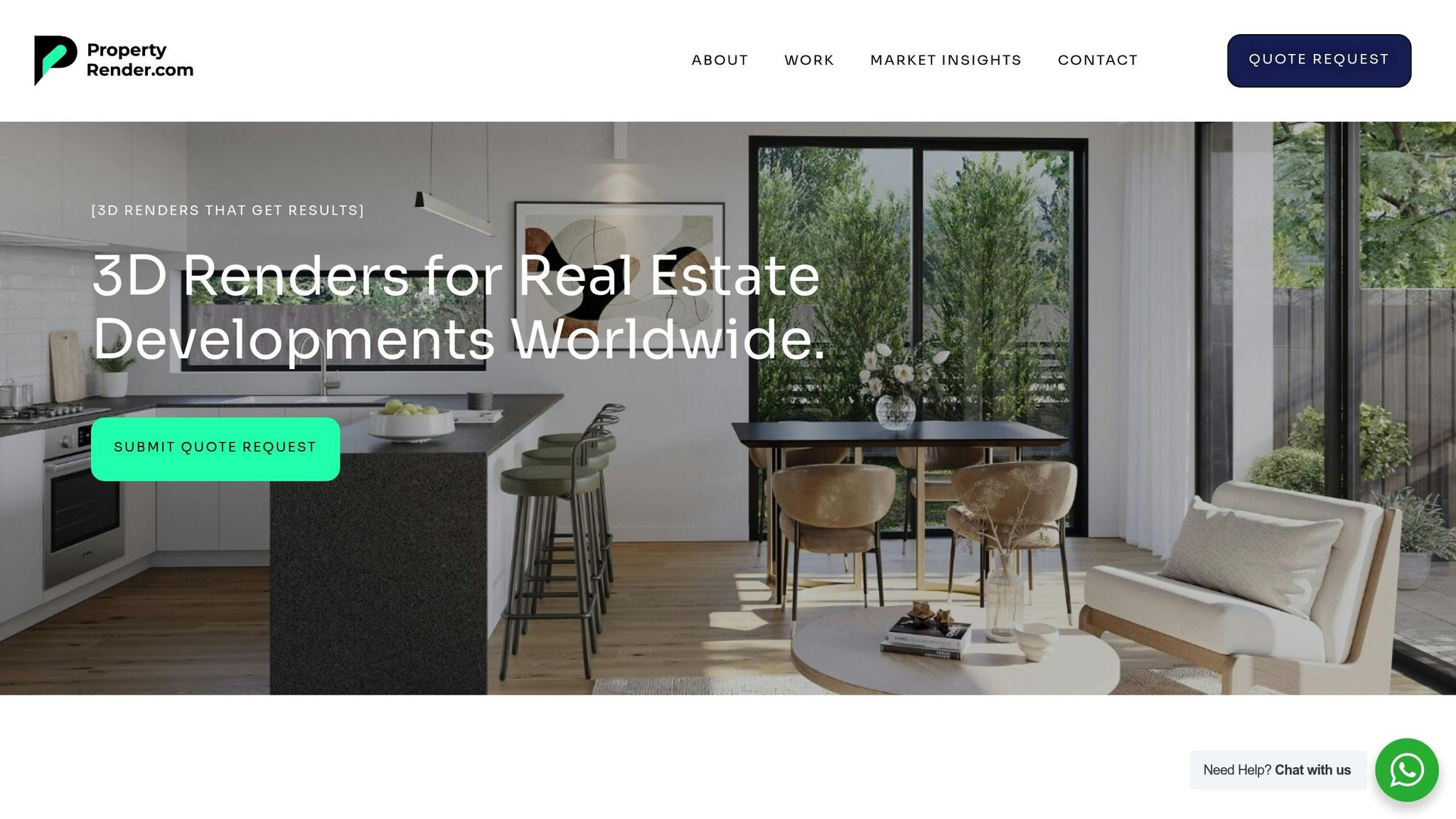
When it comes to engaging buyers with photorealistic visuals, having the right partner can make all the difference. For real estate professionals across the United States, Property Render offers cutting-edge 3D visualizations that elevate property marketing to the next level. Their expertise in creating lifelike renders ensures properties are showcased in a way that captures attention and drives interest. Below, we’ll explore their range of services and their deep understanding of the U.S. market.
Comprehensive Services for Real Estate Marketing
Property Render delivers a variety of visualization services designed specifically for the real estate industry. Here’s what they offer:
- Interior Renders: These bring empty spaces to life, illustrating design concepts and layout options.
- Exterior Renders: Highlight architectural details and curb appeal, helping buyers envision the property.
- Aerial Renders, Site Plans, and Streetscape Renders: Perfect for larger developments, these visuals provide context and showcase the scale of projects.
- Virtual Walkthroughs: Powered by CORE Virtual Realty Tours, these allow potential buyers to explore properties remotely, making it easier to connect with out-of-town or busy clients.
- Commercial Renders: Tailored for business spaces, these emphasize functionality and potential use.
Tailored Marketing Solutions for Real Results
To support faster sales and more effective campaigns, Property Render offers custom marketing packages. These packages combine various render types to create cohesive marketing materials. For example, their photomontage renders blend new developments seamlessly into existing environments, offering a realistic preview of how a project will integrate into its surroundings.
Expertise in the U.S. Market
Property Render understands the unique needs of the U.S. real estate market. They adhere to American standards for measurements and pricing, ensuring accuracy and relevance. Their visualizations also reflect a wide array of architectural styles that appeal to U.S. buyers, from modern designs to more traditional aesthetics.
With a focus on quality and a deep understanding of the market, Property Render helps real estate professionals showcase properties in the best possible way, making them an invaluable partner in today’s competitive landscape.
The Future of Interior Design and Real Estate Marketing
The fusion of design and technology has transformed how properties are marketed. Looking ahead, photorealistic rendering technology is set to further revolutionize the real estate industry, offering even more advanced ways to connect buyers with their potential homes. Let’s take a closer look at the current benefits and what’s on the horizon.
Key Points to Remember
Building on earlier discussions about buyer psychology and marketing strategies, photorealistic renders have become a cornerstone of creating immersive experiences that captivate buyers and accelerate sales.
The edge provided by high-quality renders is undeniable. Properties showcased with lifelike visualizations stand out in crowded online listings, attract more inquiries, and often sell faster than those relying solely on traditional photos or basic floor plans. Virtual walkthroughs are especially impactful, enabling buyers to explore properties from anywhere, which is invaluable for reaching out-of-state or international clients.
These tools have also revolutionized marketing efficiency. Real estate professionals can now produce stunning marketing materials before construction is complete, paving the way for pre-sales and shorter time on the market. Additionally, the ability to present multiple design options for the same space caters to a variety of buyer preferences, helping developers appeal to different audiences.
What’s Next: Technology’s Growing Role
The future holds even more exciting advancements. Artificial intelligence (AI) is starting to streamline parts of the rendering process, making it easier and more affordable to create high-quality visuals. Machine learning algorithms can now recommend furniture arrangements, color schemes, and lighting setups based on a room’s dimensions and architecture.
Real-time rendering is also evolving quickly, enabling instant changes during client presentations. Soon, real estate professionals will be able to adjust wall colors, swap furniture, or modify lighting conditions in real time during virtual tours, creating a dynamic and interactive experience.
Another exciting development is the integration of smart home technology. Future renders will highlight features like automated lighting, voice-controlled appliances, and other connected devices, showing buyers not just how a space looks but how it works in daily life.
Mobile augmented reality (AR) is set to take visualization to the next level. Buyers will soon be able to point their smartphones at an empty room and instantly see it furnished or overlay different design options onto existing spaces.
As these technologies become more widespread, the demand for high-quality visualizations will only grow. Properties without these advanced tools may soon feel outdated, making photorealistic renders not just a competitive edge but an industry standard.
FAQs
How do photorealistic renders compare to traditional real estate photography in terms of cost and results?
Photorealistic renders often offer a more budget-friendly and effective alternative to traditional real estate photography. They eliminate the need for physical staging, repeated photo sessions, and expensive reshoots, which means less hassle and fewer expenses. Plus, these renders can be produced quickly, allowing properties to hit the market sooner.
When it comes to results, these lifelike visuals have a track record of boosting buyer interest, leading to quicker sales and better offers. In fact, homes showcased with photorealistic renders tend to sell 20% faster and can fetch up to 27% more – a game-changer in the fast-paced U.S. real estate market.
What are the main advantages of virtual walkthroughs for remote homebuyers?
Virtual walkthroughs give remote buyers a detailed and lifelike way to explore a property without stepping foot inside. These immersive tools help buyers picture themselves in the space, easing doubts and boosting confidence in their choices.
What’s more, virtual tours are accessible 24/7, allowing buyers to view properties whenever it fits their schedule. This convenience not only saves time for buyers and agents but also streamlines the decision-making process. By offering an interactive and engaging experience, virtual walkthroughs can set properties apart in a crowded market.
How does augmented reality improve the home-buying experience with photorealistic renders?
Augmented reality (AR) transforms the home-buying journey by providing immersive virtual tours that allow buyers to explore properties in extraordinary detail – all without stepping foot inside. With AR, potential buyers can customize spaces on the spot, experimenting with different layouts, furniture arrangements, and finishes to see how a home could align with their vision.
This technology not only helps buyers feel more assured about their choices but also eliminates the hassle of unnecessary travel, saving both time and money. The result? A smoother, more engaging, and tailored experience that makes the process far more convenient.


