


Interactive content outperforms static visuals in real estate marketing. Here’s why:
- Interactive content (like virtual walkthroughs, 360° tours, and clickable floor plans) allows buyers to explore properties in-depth, boosting engagement and decision-making.
- Static visuals (like 2D renders and brochures) are great for first impressions but lack the depth for detailed property understanding.
- Key findings: Interactive tools lead to longer session times, higher lead generation, and more confident purchase decisions, especially for off-the-plan properties.
Quick Comparison
| Content Type | Primary Use | Engagement Level |
|---|---|---|
| Virtual Walkthroughs | In-depth property exploration | High – Interactive navigation |
| 360° Tours | Comprehensive space viewing | High – User-controlled |
| Clickable Floor Plans | Layout understanding | Medium – Interactive elements |
| 2D Renders | Initial visual impact | Low – Fixed view |
| Marketing Materials | Brand awareness | Low – Static presentation |
Combining static visuals for first impressions with interactive tools for deeper engagement ensures a balanced and effective marketing strategy. This mix is essential for meeting modern buyer expectations.
All-in-One Real Estate Visualization
Static vs. Interactive Content Basics
The main difference between static and interactive content lies in how potential buyers engage with property presentations. Static visuals offer fixed perspectives, while interactive content allows for dynamic exploration, giving buyers a deeper understanding of property features.
Here’s a breakdown of the key formats and functionalities that set interactive content apart from static options.
Interactive Content Types
Interactive content reshapes how buyers experience properties, especially those not yet built. Key examples include:
Virtual Walkthroughs: These let buyers navigate digital property layouts freely. They can view spaces from multiple angles, interact with design elements, and even experiment with finishes and fixtures.
360° Tours: These provide panoramic views of spaces, allowing users to control their perspective. With this technology, buyers can:
- Understand spatial relationships
- See rooms from every angle
- Observe natural light patterns
- Assess room sizes accurately
Clickable Floor Plans: These tools let users explore layouts interactively. Features include:
- Switching between different levels
- Accessing detailed room specs
- Viewing connected spaces
- Experimenting with furniture placement
Static Visual Types
Static visuals remain an essential part of property marketing, offering clear and polished representations:
2D Renders: These highlight:
- Exterior elevations
- Interior design concepts
- Landscape designs
- Street views and facades
Fixed Marketing Materials: These include:
- Printed brochures
- Billboard ads
- Email marketing images
- Social media visuals
Comparing Content Types
Here’s how static and interactive content differ in terms of use and engagement:
| Content Type | Primary Use | Engagement Level |
|---|---|---|
| Virtual Walkthroughs | In-depth property exploration | High – Interactive navigation |
| 360° Tours | Comprehensive space viewing | High – User-controlled perspective |
| Clickable Floor Plans | Layout understanding | Medium – Interactive elements |
| 2D Renders | Initial visual impact | Low – Fixed view |
| Marketing Materials | Brand awareness | Low – Static presentation |
Interactive content has significantly changed real estate marketing. While static visuals are great for creating strong first impressions, interactive formats encourage deeper engagement and better property understanding. This is especially valuable for off-the-plan sales, where physical inspections aren’t possible. Tools like 3D renders and virtual tours have proven effective in boosting sales and capturing buyer interest.
These differences highlight the growing shift toward more immersive property marketing strategies.
Measuring Engagement: Data Comparison
Research indicates that interactive property content – such as virtual walkthroughs, 360° tours, and interactive floor plans – captures buyers’ interest more effectively than static visuals. These tools allow for detailed property exploration, leading to heightened buyer interest. The impact of this engagement can be tracked using various performance metrics.
User Time and Activity Metrics
Virtual walkthroughs and 3D tours give users the freedom to explore properties at their own pace. This flexibility encourages more thorough investigations and keeps potential buyers engaged for longer periods.
Lead Generation Results
Interactive features significantly improve both engagement and lead generation. Buyers who use virtual tours or engage with dynamic floor plans are more likely to request additional details or book follow-up appointments.
Overall Performance Insights
Trends reveal that interactive content leads to longer session durations, repeat visits, and more frequent social sharing. These results highlight the value of integrating interactive tools into property marketing, as they create experiences that encourage deeper exploration and stronger connections with potential buyers.
Interactive Content Advantages
Interactive content grabs buyers’ attention and helps them make decisions faster by creating stronger connections.
Immersive Property Tours
Virtual property tours are changing how buyers experience off-the-plan properties. With photorealistic 3D renders and interactive walkthroughs, potential buyers can:
- Explore and imagine the property’s full potential
- Make better decisions about room layouts and space
- Save time by viewing multiple properties remotely
- Clearly understand how rooms connect and flow
Property Render’s interactive tools, powered by CORE VR technology, allow buyers to virtually step into future homes. This creates an emotional connection by helping them visualize living in the space.
Impact on Buyer Engagement
Interactive content takes buyer engagement to the next level by offering personal and memorable experiences. When buyers actively explore property features, they gain a deeper understanding and feel more invested in the space.
Some key benefits include:
- Customized viewing experiences that build buyer confidence
- Greater trust in purchase decisions
- Emotional attachment to the property
- Faster decision-making thanks to detailed virtual access
This approach is especially useful for off-the-plan sales. Property Render’s virtual walkthroughs and 3D renders turn abstract floor plans into detailed, explorable spaces, making it easier for buyers to connect with the property.
Interactive tools are particularly helpful for:
- Buyers in remote locations: They can explore properties in detail from anywhere.
- Urgent decisions: Immediate access to property details speeds up the process.
- Complex developments: Unique layouts and features are easier to understand.
- Luxury properties: High-end finishes and details are showcased effectively.
sbb-itb-e3e39b4
Combining Static and Interactive Elements
A strong marketing approach uses both static visuals and interactive content, each serving unique purposes at different stages of the buyer’s journey.
When to Use Static Content
Static visuals are perfect for creating quick, lasting impressions. These are ideal for marketing materials like:
- Property brochures and flyers
- Billboard ads
- Social media graphics
- Email campaigns
They excel in showcasing:
- Exterior architecture and streetscape views
- Key interior design highlights
- Signature amenities
- Aerial views of the property
- Site plan layouts
Property Render’s photorealistic static renders bring these elements to life, emphasizing architectural details and finishes.
When to Use Interactive Content
Interactive content is all about keeping potential buyers engaged, especially when they’re ready to dive deeper into property details. Use interactive tools for:
- Virtual property tours
- Interactive floor plans
- 360-degree panoramic views
With CORE VR, buyers can explore spaces, understand room layouts, and get a closer look at property features.
Blending Static and Interactive Content
To maximize impact, combine static visuals and interactive tools thoughtfully. Here’s how they complement each stage of the buyer’s journey:
| Marketing Stage | Static Content Role | Interactive Content Role |
|---|---|---|
| Initial Awareness | Grab attention with exterior renders | Drive curiosity with virtual tours |
| Property Overview | Highlight key features in images | Allow exploration with interactive floor plans |
| Detailed Research | Focus on specific design elements | Provide virtual walkthroughs |
| Decision Making | Showcase final specifications | Build confidence through immersive experiences |
Static visuals make the first impression, while interactive content encourages deeper exploration, ensuring buyers stay engaged from start to finish.
Next, discover how Property Render takes these strategies further with cutting-edge interactive tools and precise 3D rendering services.
Property Render Services Overview
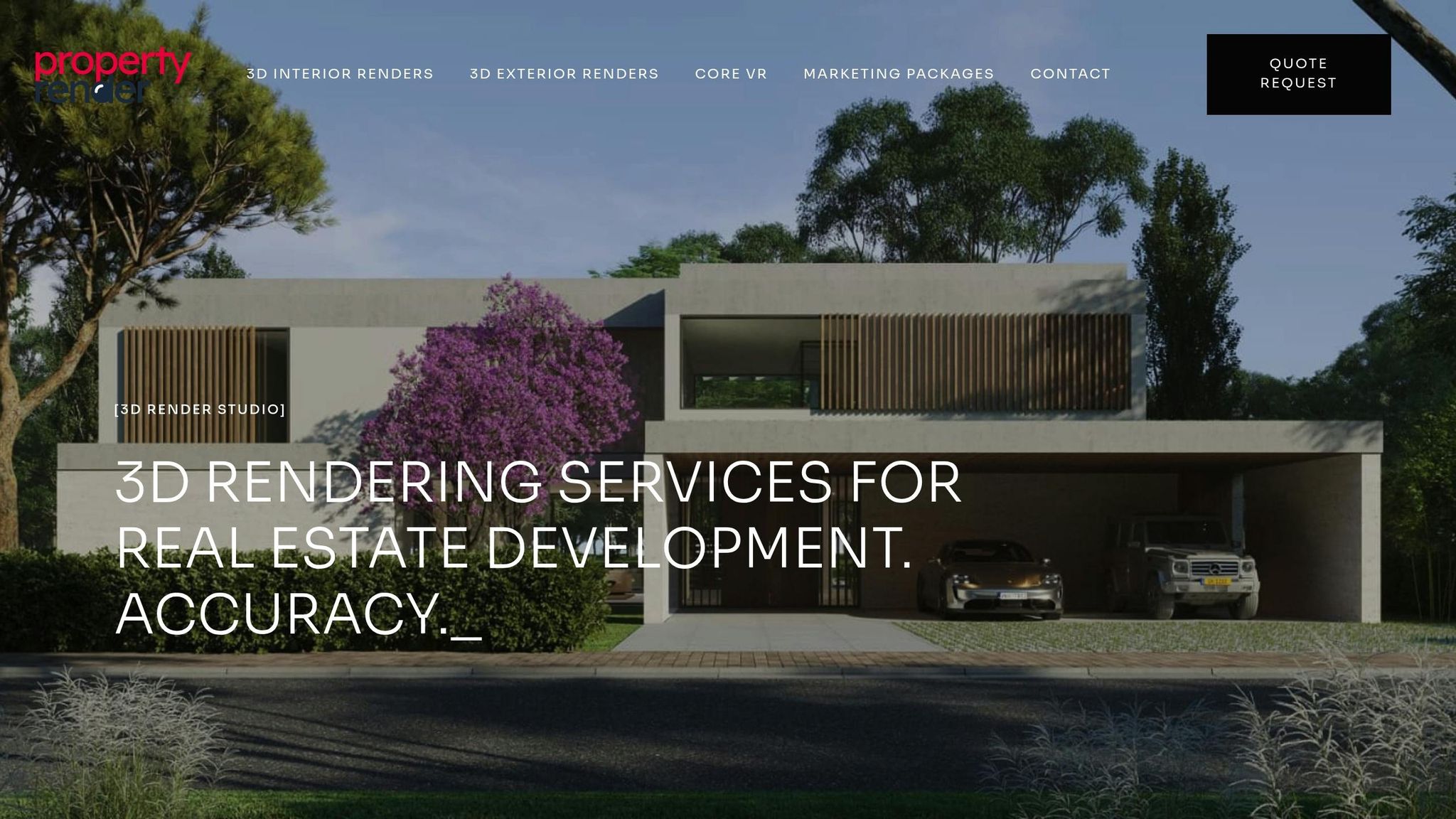
Property Render delivers a full suite of visualization services that bring properties to life through a mix of static visuals and interactive experiences. By blending cutting-edge technology with skilled craftsmanship, they create property presentations that stand out. Below, we explore how their interactive tools and 3D rendering services elevate property marketing.
Interactive Tools and Tours
Property Render’s CORE VR technology turns traditional property viewings into immersive digital experiences. These virtual walkthroughs allow potential buyers to:
- Move through digital spaces at their own pace
- Get a clear sense of spatial flow and layout
- Examine material finishes closely
- Explore properties from various angles
Interactive floor plans take the experience further by enabling users to:
- Switch between different floor configurations
- Review detailed room specifications
- Experiment with furniture placements
- Adjust lighting to see how it transforms the space
These interactive elements are paired with advanced 3D rendering services to create a comprehensive property marketing solution.
3D Rendering Services
Property Render’s 3D visualization services provide lifelike representations of properties, whether built or still in planning. Their approach follows a structured four-phase process to ensure high-quality results. Here’s a breakdown of their key services:
| Service Type | Key Features | Marketing Applications |
|---|---|---|
| Interior Renders | Detailed lighting, textures, and staging | Digital ads, brochures, marketing materials |
| Exterior Renders | Architectural details and landscaping | Websites, billboards, print ads |
| Aerial Views | Context of the site and nearby amenities | Development overviews, location marketing |
| Streetscape Renders | Urban surroundings and building façades | Project positioning, community planning |
| Site Plans | Layout and circulation details | Sales displays, project documentation |
These services align to create a cohesive marketing strategy, ensuring strong visual appeal and consistent messaging across all platforms.
For commercial projects, Property Render’s tools are especially effective in showcasing:
- Multi-story office buildings
- Retail spaces
- Industrial facilities
- Mixed-use developments
Each rendering is tailored to its platform – whether for print, digital ads, or virtual tours – delivering professional results that enhance property presentations across all channels.
Interactive Content: Next Steps
New technologies are changing the way properties are showcased, moving away from static images toward dynamic and engaging experiences.
Augmented Reality Integration
In February 2025, Property Render highlighted how augmented reality (AR) is changing property showcases by increasing buyer engagement and speeding up sales. AR blends digital elements with real-world environments, giving potential buyers a more immersive way to explore property features.
Advanced Virtual Walkthrough Features
Virtual walkthroughs remain a key part of modern property marketing. As the technology improves, these experiences become even more engaging, offering buyers a better sense of the property before visiting in person.
Interactive Floor Plan Evolution
Interactive floor plans are becoming more sophisticated by integrating with virtual tours and AR. These tools help buyers visualize spatial layouts more clearly, making it easier to understand a property’s flow and design. This marks a shift toward more seamless and connected interactive features.
Gamification Elements
Adding gamification to property showcases increases engagement and encourages lead generation. Features like interactive challenges or achievement systems make exploring property details more enjoyable and memorable.
Future-Ready Technology
Property Render’s CORE VR platform continues to set the standard in showcasing off-the-plan properties. By offering detailed virtual views, it enhances the way buyers experience properties, making the process more immersive and forward-thinking.
These advancements are redefining property marketing, creating more engaging ways for buyers to explore and connect with real estate options in today’s competitive market.
Conclusion
The comparison between interactive content and static visuals highlights a clear shift in how effective marketing can be. By blending the detailed accuracy of static renders with the engaging experience of interactive content, campaigns can achieve better results while helping buyers make smarter decisions about off-the-plan properties.
New advancements in property visualization now make it possible to create detailed virtual experiences for properties that haven’t been built yet. For example, Property Render’s CORE VR platform combines interactive walkthroughs with traditional renders, striking a balance between precise details and dynamic engagement.
Success in this space often comes from using a mix of tools, including:
- Static renders for detailed accuracy
- Virtual walkthroughs for an immersive experience
- Interactive floor plans for better spatial understanding
This blend of interactive and static content is shaping the future of property marketing. By adopting this approach, real estate professionals can keep up with changing buyer expectations and deliver better outcomes. This multi-format strategy is set to play a major role in how properties are marketed moving forward.
FAQs
How does interactive content improve buyer engagement compared to static visuals in real estate marketing?
Interactive content, such as virtual walkthroughs or gamified experiences, significantly enhances buyer engagement by creating a more immersive and personalized experience. Unlike static visuals, interactive tools allow potential buyers to explore properties at their own pace, visualize spaces in greater detail, and connect emotionally with the property, making it easier to imagine themselves living there.
Static visuals, such as 2D images or basic floor plans, are valuable but often limited in conveying the full potential of a property. By contrast, interactive content not only grabs attention but also keeps buyers engaged for longer periods, ultimately increasing the likelihood of inquiries and conversions. Leveraging tools like virtual tours or 3D renderings can be a game-changer for real estate marketing.
What are the main advantages of virtual walkthroughs and 360° tours for showcasing properties that haven’t been built yet?
Virtual walkthroughs and 360° tours offer a realistic and immersive experience for potential buyers, allowing them to visualize off-the-plan properties as if they were already built. These tools help bridge the gap between imagination and reality by showcasing detailed layouts, finishes, and spatial flow.
They also enhance buyer confidence, making it easier to make informed decisions without needing a physical property to visit. This approach is especially effective for marketing new developments and pre-construction projects to a broader audience.
How can real estate professionals use both static visuals and interactive content to boost marketing results?
Real estate professionals can achieve greater marketing impact by combining static visuals, like high-quality interior and exterior renders, with interactive content, such as virtual walkthroughs. Static visuals provide a polished, detailed view of the property, while interactive tools allow potential buyers to explore spaces dynamically, creating a more immersive experience.
By leveraging services like 3D renders, aerial views, and virtual walkthroughs, real estate teams can effectively showcase properties – whether they’re completed or still in development – helping buyers visualize their future homes and driving engagement. This balanced approach ensures both clarity and interactivity, appealing to a wider audience.


