

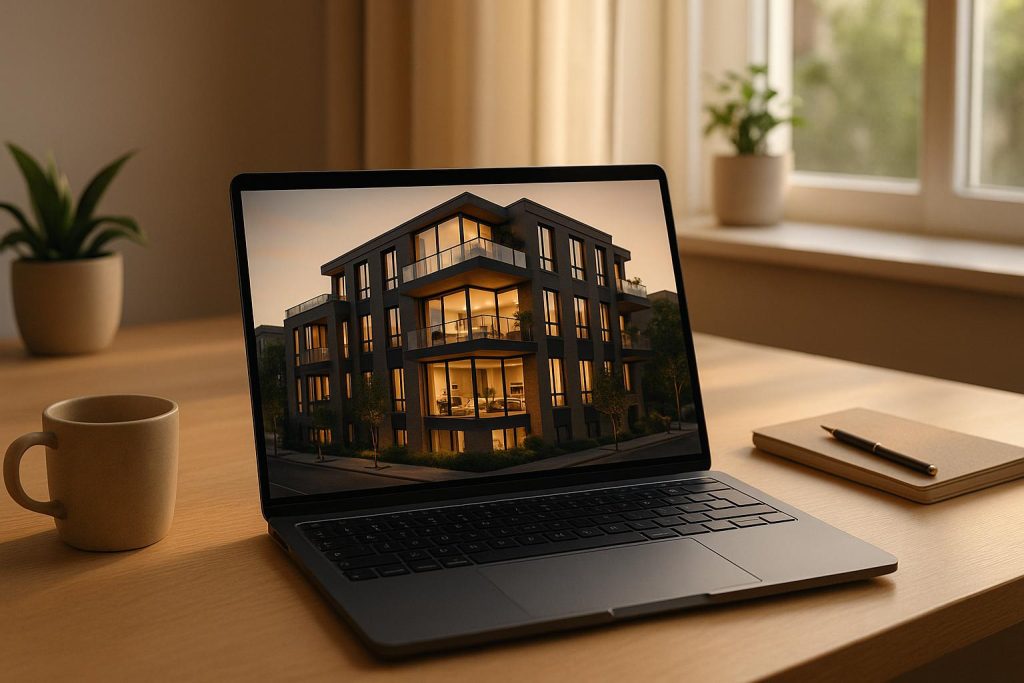
Want to sell properties faster? 3D visualization makes it possible. Developers no longer need to wait for construction to finish to start marketing. With tools like photorealistic renders, virtual walkthroughs, and aerial views, you can showcase properties months ahead of completion. This approach not only speeds up time-to-market but also helps attract serious buyers, shorten sales cycles, and improve overall engagement. Here’s how 3D visualization is changing real estate marketing:
- Photorealistic renders: Show detailed interiors and exteriors before construction.
- Virtual walkthroughs: Let buyers explore remotely, reducing in-person visits.
- Aerial views: Highlight location benefits and neighborhood context.
- Site and floor plans: Provide clear layouts and design details.
These tools give buyers a clear vision of the property, helping them make decisions faster. By integrating 3D visuals into your marketing, you can stay ahead in a competitive market and close deals sooner.
Pre-Construction Real Estate Media Package | 3D Renders, Floor Plans & Marketing Tools
3D Visualization Tools That Cut Marketing Time in Half
3D visualization tools are transforming the way developers approach marketing by eliminating the need to wait for construction milestones. Instead of delaying campaigns until physical progress is visible, developers can now use photorealistic renders, virtual walkthroughs, and aerial views to launch visually compelling campaigns early. These tools not only create immersive experiences but also help potential buyers move through the sales process faster. Let’s dive into how these tools make such a big difference.
Photorealistic Renders and Their Impact
Photorealistic renders bring future properties to life with incredible detail. They showcase the finished project as if it already exists, complete with materials, lighting, and even furniture placement. This level of realism allows developers to kick off marketing efforts months – or even years – before construction wraps up. The result? Buyers feel more confident in their decisions, and projects move forward faster.
Interior renders let buyers visualize room layouts and finishes, while exterior renders highlight architectural elements, landscaping, and building materials. This comprehensive approach not only helps buyers but also streamlines the design process. Developers and architects can iterate faster, gather feedback efficiently, and validate designs before construction starts, avoiding costly mid-project changes.
On top of that, photorealistic renders improve collaboration. By providing a clear, shared visual reference, these images make it easier for architects, developers, investors, and marketing teams to align on decisions and secure approvals more quickly.
And the benefits don’t stop at static images. Interactive visuals take buyer engagement to the next level.
Virtual Walkthroughs for Remote Property Tours
Virtual walkthroughs give potential buyers the freedom to explore properties from anywhere, at any time. Instead of coordinating multiple in-person visits, buyers can take their time navigating interactive tours online. This means that by the time they do visit in person, they’re already familiar with the layout and features, making those meetings more productive and decisions faster.
This technology also opens up opportunities to reach a broader audience, including out-of-state buyers, those relocating, and even international prospects. By cutting down on the need for initial site visits, virtual walkthroughs let sales teams focus their energy on serious buyers. These tours are especially powerful for pre-construction sales, as they allow buyers to get a sense of space and flow long before anything is physically built.
Aerial and Streetscape Views
Aerial and streetscape views add another layer of clarity by showcasing the property’s location and its surroundings. Aerial views highlight how close the property is to amenities, transportation, and natural features, while streetscape renders show how it fits into the neighborhood. These perspectives provide buyers with a better understanding of the community’s character and appeal.
For mixed-use developments, aerial views can illustrate how residential, commercial, and recreational spaces come together, offering a complete picture of the project. This upfront transparency addresses common buyer concerns and generates excitement about the development.
When used as part of a larger marketing strategy, these visualization tools create a strong visual impact and deepen buyer engagement. The result? Faster market entry and a smoother sales process.
How 3D Visualization Boosts Buyer Engagement and Sales
3D visualization is transforming how buyers engage with properties, speeding up decision-making and driving sales. These visuals go beyond mere representation – they create immersive experiences that captivate potential buyers and encourage quicker action.
Building Emotional Connections Through Visuals
3D visuals have a unique ability to connect with buyers on an emotional level. Through photorealistic renders and virtual tours, buyers can picture themselves living in a space, turning what might have been casual interest into genuine excitement.
For instance, a simple description like "spacious living areas with natural light" requires buyers to imagine the scene. But a photorealistic render showing sunlight streaming through large windows onto polished hardwood floors? That instantly sparks a vision – hosting dinner parties, relaxing with family, or enjoying a quiet moment. This emotional resonance makes properties feel personal and inviting.
This emotional connection often leads to faster decisions. When buyers feel attached to a property, they’re more likely to act quickly – booking showings, making offers, and entering negotiations with real intent. The visuals do much of the heavy lifting, helping buyers fall in love with a property before they even visit it.
Virtual walkthroughs take this engagement further by giving buyers control. They can explore rooms at their own pace, revisit key areas, and even share the experience with family members who can’t attend in person. This sense of personal exploration fosters a deeper connection than static photos ever could.
Faster Lead Qualification Process
3D visualization also streamlines the lead qualification process. By offering detailed virtual tours and high-quality visuals, listings allow buyers to assess whether a property meets their needs before contacting an agent. This means the inquiries agents receive are more likely to come from serious, well-informed buyers.
Traditional listings often generate a flood of unqualified leads, leaving agents to answer basic questions, schedule unnecessary showings, and manage misaligned expectations. In contrast, comprehensive 3D assets give buyers a clear understanding of a property’s layout, features, and flow. By the time they reach out, they’ve already done much of their research.
This efficiency benefits everyone. Agents spend less time on unproductive tasks and more time with motivated buyers. Negotiations also tend to move faster, as buyers have already visualized the property and addressed many of their questions through the virtual experience. The result? A compressed sales cycle that saves time and energy for both buyers and sellers.
Better Listing Recall and Return Visits
3D visuals help properties stand out and stay memorable. In a competitive market where buyers may browse dozens of listings in one session, eye-catching visuals can make all the difference. Aerial views showcasing nearby parks or amenities, or renders highlighting unique architectural details, leave a lasting impression that plain text descriptions simply can’t match.
This memorability leads to more return visits. Buyers often revisit listings they’re seriously considering, and properties with engaging visuals tend to see significantly more repeat traffic. These visuals also encourage organic sharing – buyers frequently send virtual tours or renders to friends, family, or partners for input, broadening the property’s reach.
Additionally, properties with strong visual content remain top-of-mind during the decision-making process. When comparing multiple options, buyers are more likely to remember and prioritize listings with clear, detailed visuals. These properties often make it onto shortlists, increasing the likelihood of serious consideration and offers.
The combination of emotional engagement, efficient lead qualification, and strong recall creates a powerful sales dynamic. Properties with compelling 3D visuals move through the sales pipeline faster, helping developers and agents achieve quicker closings and shorter time-to-market.
sbb-itb-e3e39b4
How to Use 3D Visualization for Better Marketing Results
Reducing In-Person Showings with Interactive Content
Interactive 3D tools have become an essential part of modern property marketing, helping speed up decision-making and streamline the buying process.
With virtual walkthroughs and 3D models, potential buyers can explore properties from the comfort of their homes, cutting down on the need for initial in-person showings. These tools go beyond static images or videos by offering 360° views and allowing users to customize features like wall colors, flooring, or furniture. This level of personalization makes the experience more engaging and tailored to individual preferences.
Virtual tours also let viewers navigate through spaces at their own pace, zoom in on specific details, and shift perspectives. Buyers can revisit areas of interest as often as they like and even share the experience with family or friends. This interactive approach not only reduces the need for physical visits but also helps buyers feel more confident and ready to make decisions faster.
For pre-construction properties, where the lack of a tangible product can make buyers hesitant, interactive 3D content is especially effective. It allows buyers to visualize floor plans, finishes, and spatial layouts before construction is complete. This helps build trust and accelerates the sales process by making the project feel more real and accessible.
3D Visualization vs. Standard Real Estate Marketing Methods
Building on earlier discussions about speeding up sales cycles, let’s dive into how 3D visualization stacks up against traditional real estate marketing techniques.
3D visualization doesn’t just accelerate time-to-market – it redefines how buyers engage with properties. While traditional methods like static photos and 2D floor plans have long been the norm, 3D visualization introduces an immersive experience, letting potential buyers virtually explore properties even before construction begins.
Traditional marketing tools – like photos, brochures, and 2D floor plans – are useful but often limited. Static images struggle to convey how spaces connect and flow, leaving buyers to rely on their imagination. Similarly, 2D floor plans can feel abstract, making it harder to visualize how a property will look and feel in real life.
With 3D visualization, buyers can make quicker decisions thanks to interactive, engaging visuals that bring listings to life. This technology changes the way buyers interact with properties from the very first click.
Another major advantage is accessibility. Unlike traditional showings, which require coordinating schedules between agents, sellers, and buyers, 3D visualizations are available 24/7. This flexibility allows buyers to research properties on their own time, expanding the potential audience and streamlining the sales process.
Pros and Cons of 3D Visualization
Here’s a closer look at how 3D visualization compares to standard marketing methods:
| Aspect | 3D Visualization | Standard Methods |
|---|---|---|
| Buyer Engagement | Interactive 360-degree views, virtual walkthroughs | Static photos, printed brochures, basic plans |
| Speed to Market | Always accessible, faster decision-making | Requires scheduling and site visits |
| Emotional Impact | Immersive, builds stronger connections | Less effective at creating emotional bonds |
| Pre-Construction Marketing | Full visualizations before completion | Relies on imagination and 2D plans |
| Geographic Reach | Global access, remote viewings | Mostly limited to local buyers |
| Information Transparency | All property details consolidated | Scattered across various materials |
3D visualization simplifies the research process by consolidating property details like square footage, room count, and location into one interactive experience. This transparency builds trust and makes it easier for buyers to evaluate properties.
What’s more, personalization options in 3D visualization – like changing wall colors, finishes, or layouts – take buyer engagement to the next level. These features allow buyers to see how a space could look with their preferences, creating a stronger emotional connection to the property. Traditional methods simply can’t match this level of customization.
Features like 360-degree views and virtual tours also provide a sense of spatial flow that static photos can’t replicate. While professional photography captures a property’s best angles, it doesn’t offer the immersive experience of virtually walking through a space.
On top of that, 3D visualization enhances marketing efforts by drawing more attention, increasing website traffic, and boosting conversion rates from inquiries to sales. Whether used in brochures, websites, or social media campaigns, 3D visualization makes properties more appealing and integrates seamlessly with traditional methods to amplify results.
Get to Market Faster with Property Render‘s 3D Visualization
Property Render’s 3D visualization tools are designed to help you hit the ground running. By offering a complete range of 3D renderings, we eliminate the usual delays tied to waiting for construction to finish. This means developers and agents can kick off marketing campaigns months ahead of schedule.
But it’s not just about speed. These visualizations also create a more engaging experience for potential buyers. Imagine giving them the ability to virtually tour a property or explore the surrounding neighborhood before the first brick is laid. This kind of immersive experience can lead to faster, more confident purchasing decisions.
To take it a step further, Property Render seamlessly integrates these tools into comprehensive marketing packages. Whether you’re showcasing off-the-plan developments, luxury homes, or commercial spaces, our solutions – like CORE Virtual Realty Tours, photomontage renders, and streetscape views – bring your properties to life. They don’t just tell a story; they show it, highlighting location advantages and project features in stunning detail.
By combining faster campaign readiness, improved buyer engagement, and more efficient sales cycles, Property Render helps you get to profitability quicker. Plus, we handle the production details, so you can focus on what you do best: building relationships and closing deals.
Ready to transform your marketing strategy? Let Property Render guide the way.
FAQs
How does 3D visualization help buyers make decisions faster compared to traditional marketing methods?
3D visualization allows buyers to make quicker and more confident decisions by providing realistic, immersive views of properties. These visuals let potential buyers dive into layouts, designs, and features with greater detail, cutting down on the uncertainty that often comes with relying solely on photos or written descriptions.
With tools like virtual walkthroughs and photorealistic renders, 3D visualization keeps buyers engaged for longer periods and helps establish trust. Properties showcased using these tools often attract more attention and generate higher interest, which can lead to faster sales and fewer delays in finalizing decisions.
How does 3D visualization help speed up the process of bringing properties to market?
3D visualization tools, such as photorealistic renders, virtual walkthroughs, and interactive designs, play a big role in speeding up property sales. They make it easier for potential buyers to picture themselves in the space, creating a stronger emotional connection. This often leads to quicker decisions, helping properties sell up to 20–31% faster.
On top of that, features like early clash detection and quicker design revisions simplify project workflows, shaving about 20% off overall timelines. By streamlining processes and enhancing the buyer experience, 3D visualization helps properties get to market – and sell – more efficiently.
How can 3D visualization help market pre-construction properties and address buyer concerns?
3D visualization serves as an incredible asset for marketing pre-construction properties by bringing future developments to life with detailed, lifelike visuals. It lets potential buyers get a clear sense of what the finished property will look like, addressing questions about design, layout, and overall aesthetics well before construction even begins.
Through immersive tools like virtual tours and photorealistic renderings, buyers can virtually step inside the property as if it already exists. This experience not only boosts their confidence but also helps them make decisions faster. On top of that, 3D visualization showcases personalized options, making buyers feel more connected to their future home while easing any concerns about how the final product will turn out.


