


3D rendering is reshaping how commercial real estate is marketed in 2025. It transforms property concepts into interactive, lifelike visuals, making it easier for clients to envision spaces. Key trends include:
- Real-Time Rendering: Instant updates during presentations, allowing clients to see changes like lighting or layout adjustments immediately.
- Interactive Tools: 360° tours with clickable details and mobile-friendly experiences for remote property exploration.
- AI Integration: Faster rendering, predictive design insights, and smarter VR tours that adapt to user behavior.
- Photorealistic Walkthroughs: Detailed virtual previews of properties, helping identify potential design issues early.
- VR/AR Applications: Immersive tours for remote clients and pre-construction marketing.
- Sustainability Visualization: Highlighting eco-friendly features like solar panels or green roofs to meet growing demand for energy-efficient spaces.
These tools improve client engagement, speed up decision-making, and expand market reach. Developers and brokers who adopt these technologies can present properties more effectively and close deals faster.
Real-Time Rendering and Interactive Tools
Real-Time Rendering for Instant Changes
Real-time rendering has completely changed how commercial real estate professionals showcase properties. With this technology, 3D models can be updated instantly during live presentations, making it possible to adjust elements like lighting or flooring on the spot.
By processing visual updates in milliseconds, real-time rendering handles intricate details like lighting effects, material textures, and spatial relationships. This transforms client meetings from static slide shows into dynamic, collaborative sessions where ideas can be explored in real time. For large-scale projects, this is a game-changer. Clients can review multiple layout options and make decisions immediately, eliminating the need for follow-ups to review new renderings.
Another standout feature is its ability to support multi-user collaboration. Architects, developers, and clients can all join the same virtual environment, seeing updates as they happen. If one participant makes a change, it’s instantly visible to everyone, speeding up the entire decision-making process. Combined with interactive tours, this technology takes remote property exploration to a whole new level.
Interactive 360° Tours and Walkthroughs
Interactive 360° tours have become a cornerstone of remote property marketing in commercial real estate. These tools allow buyers and tenants to explore spaces from anywhere, giving them a clear understanding of the layout, flow, and potential of a property.
Today’s 360° tours go far beyond simple panoramic views. They feature clickable hotspots that provide detailed information about specific areas, such as square footage, ceiling heights, HVAC systems, or utility setups. This extra layer of detail helps clients determine if a property meets their needs without requiring multiple site visits.
These tours can also be tailored to specific industries. For example:
- A restaurant owner might focus on kitchen layouts and customer flow.
- A tech company would likely prioritize open workspaces and meeting room designs.
What’s more, mobile compatibility ensures these tours run smoothly on any device, whether it’s a desktop, tablet, or smartphone. This flexibility is essential for decision-makers who often review properties while traveling or between meetings. Mobile-friendly presentations keep clients engaged, no matter where they are.
How This Affects Sales and Client Engagement
The use of real-time rendering and interactive tools has led to noticeable improvements in sales efficiency and client satisfaction. By enabling quicker decision-making, these tools cut down on lengthy negotiations and back-and-forth discussions.
Interactive features also broaden the reach of commercial real estate listings. Properties become accessible to clients from out-of-state or even overseas, attracting interest from buyers or tenants who might not have considered them otherwise. For high-value commercial developments, this expanded audience is a major advantage.
These immersive experiences help clients picture their businesses operating within the space, leading to faster and more confident decisions. As these tools continue to evolve, they pave the way for even more advanced visualization techniques powered by AI, which will be explored in the next section.
6 FREE AI ARCHITECTURE RENDERING Tools Compared | Step-by-Step Guide
AI-Powered Tools and Predictive Analytics
AI is reshaping how 3D renderings are created and refined in commercial real estate, going far beyond basic adjustments. Today’s AI-driven rendering engines handle intricate tasks like complex lighting, material textures, and environmental effects with impressive speed and precision. These systems can even learn from reference images to automatically generate photorealistic materials. Instead of spending hours on manual tweaks, AI algorithms streamline the process, perfecting textures and reflections in record time.
Machine learning takes this a step further by focusing processing power on the most visually important areas, reducing detail where it’s less critical. This smart allocation of resources drastically cuts rendering times compared to traditional methods. On top of that, AI algorithms enhance the final output by filling in gaps and creating polished, professional visuals. These advancements pave the way for the data-driven design strategies explored in the next section.
Predictive Analytics for Better Design
AI-powered predictive analytics is helping commercial real estate professionals make smarter, data-backed design decisions that improve both market appeal and functionality. By analyzing market trends and buyer preferences, these systems offer tailored recommendations for design elements. For instance, AI can evaluate factors like foot traffic patterns, demographic data, and local market conditions to suggest everything from lobby layouts to exterior color choices.
What’s more, AI can predict how different design decisions might influence property values or rental rates by comparing them to market performance data. It also examines how spaces are used by analyzing movement patterns, providing recommendations to optimize layouts for better efficiency and user experience. This is especially valuable in mixed-use developments, where multiple types of spaces need to work seamlessly together.
Collaborative VR with AI
AI’s role doesn’t stop at design and rendering – it extends into virtual reality (VR), making property tours more engaging and insightful. Integrated with VR platforms, AI offers real-time contextual information and suggestions as users explore virtual spaces. For example, smart virtual assistants can answer questions about property features, zoning rules, or nearby amenities while the tour is happening.
AI also tracks user behavior during VR tours, noting which areas draw the most attention, how much time is spent in different spaces, and common questions that arise. This feedback helps professionals refine future presentations and focus on a property’s most appealing aspects. During collaborative VR sessions, machine learning algorithms can even propose design adjustments on the spot. To further enhance teamwork, AI can automatically generate meeting summaries, track decisions made during discussions, and outline actionable next steps – all within the virtual environment.
Photorealistic Walkthroughs and VR/AR Applications
The commercial real estate world is embracing a new era where photorealistic walkthroughs and immersive technologies are no longer optional extras – they’re now essential tools for marketing success. These innovations bridge the gap between concept and reality, giving potential buyers and tenants the ability to virtually step into properties that may still be on the drawing board.
Why Photorealistic Walkthroughs Matter
Photorealistic walkthroughs allow clients to virtually experience a property before it even exists. By capturing fine details – like how natural light shifts throughout the day or the feel of specific textures – these walkthroughs help clients visualize the space without relying on imagination alone. This is especially helpful for projects where the layout and flow are critical to functionality.
These walkthroughs also help clients spot potential design issues early. For example, they might notice that a conference room lacks adequate natural light or that a retail space has awkward traffic flow. Identifying these problems before construction begins can save both time and money by avoiding costly changes later.
For developers, these tools act as a safeguard. By giving clients a clear and realistic preview of the finished project, they reduce the risk of dissatisfaction and minimize the chances of expensive change orders. Plus, these visualizations naturally lead into the use of immersive VR/AR technologies, taking property marketing to the next level.
VR/AR: Transforming Remote Property Tours
Virtual and augmented reality have completely changed how properties are marketed, making remote property tours just as engaging as in-person visits. This capability has become especially important for evaluating properties from afar.
With VR, clients can use headsets to explore spaces in a 360-degree immersive experience. They can virtually walk through lobbies, inspect office layouts, and even step onto rooftops to take in the views. This level of interaction makes remote collaboration seamless and effective.
AR goes a step further by overlaying digital elements onto real-world views. For properties undergoing renovations, AR can show clients what proposed changes will look like. Using a tablet or smartphone, they can see new facades, redesigned interiors, or modified layouts superimposed over the existing structure.
This technology has been a game-changer for international investors and companies relocating to new cities. For instance, a business expanding from New York to Austin can thoroughly evaluate properties without the time and expense of multiple site visits. This accessibility has opened doors to new markets, making it easier for developers and brokers to connect with clients who might otherwise have been out of reach.
For pre-construction projects, VR and AR have revolutionized marketing. Developers can showcase properties months before construction begins, using virtual tours to attract interest and secure commitments. This early engagement not only validates market demand but can also improve financing terms, setting the stage for quicker decision-making.
Driving Faster Sales with Immersive Technology
The rise of photorealistic walkthroughs and VR/AR tools has significantly sped up sales processes in commercial real estate. These technologies provide a level of understanding that static images and traditional presentations simply can’t match, helping buyers feel more confident in their decisions.
Virtual experiences allow clients to revisit properties as often as needed, which builds trust and speeds up decision-making. They can also compare multiple properties in a single session, making it easier to weigh options and move forward.
For complex transactions, VR offers a collaborative advantage. Stakeholders can gather in virtual spaces to review features, address concerns, and reach agreements faster than they could with traditional methods. This is particularly useful for corporate real estate decisions, which often require input from multiple departments.
For brokers and sales teams, immersive technology is a game-changer. It provides engaging presentation tools that set them apart from competitors. By showing solutions rather than just describing them, they can handle objections more effectively and keep clients interested, even during longer sales cycles typical of commercial real estate.
Another major benefit is efficiency. By reducing the need for physical site visits, sales teams can focus on the most qualified leads, cutting travel costs and increasing productivity. This allows them to handle more clients without needing to scale up their teams, delivering direct benefits to the bottom line.
sbb-itb-e3e39b4
Sustainability and Eco-Friendly Visualization
The commercial real estate industry is placing a stronger focus on sustainability. As environmental concerns gain priority among investors, tenants, and regulators, 3D rendering has become an effective way to showcase a building’s eco-friendly features and sustainable design elements.
Bringing Sustainability to Life with 3D Rendering
Modern 3D rendering can transform abstract environmental benefits into something visually tangible. For instance, renderings can illustrate renewable energy features like solar panels or wind turbines. They can also highlight green design elements such as vegetated roofs, living walls, and advanced water management systems. These visualizations make it easier to understand how these features contribute to long-term energy savings and environmental benefits. By bridging the gap between technical blueprints and real-world advantages, 3D models bring clarity to complex sustainable systems.
Addressing the Demand for Green Buildings
Sustainability has become a key factor in commercial real estate decisions. Companies are increasingly prioritizing eco-friendly properties, and detailed visualizations of these sustainable features are invaluable during the evaluation process. Through 3D renderings, stakeholders can see how a property integrates energy-efficient systems and meets green building standards. This level of detail not only aids in making informed decisions but also helps with smoother regulatory approvals and enhances a project’s market appeal. Plus, showcasing these green credentials sets the stage for stronger marketing strategies, which will be explored in the next section.
Property Render‘s Commercial Real Estate Solutions
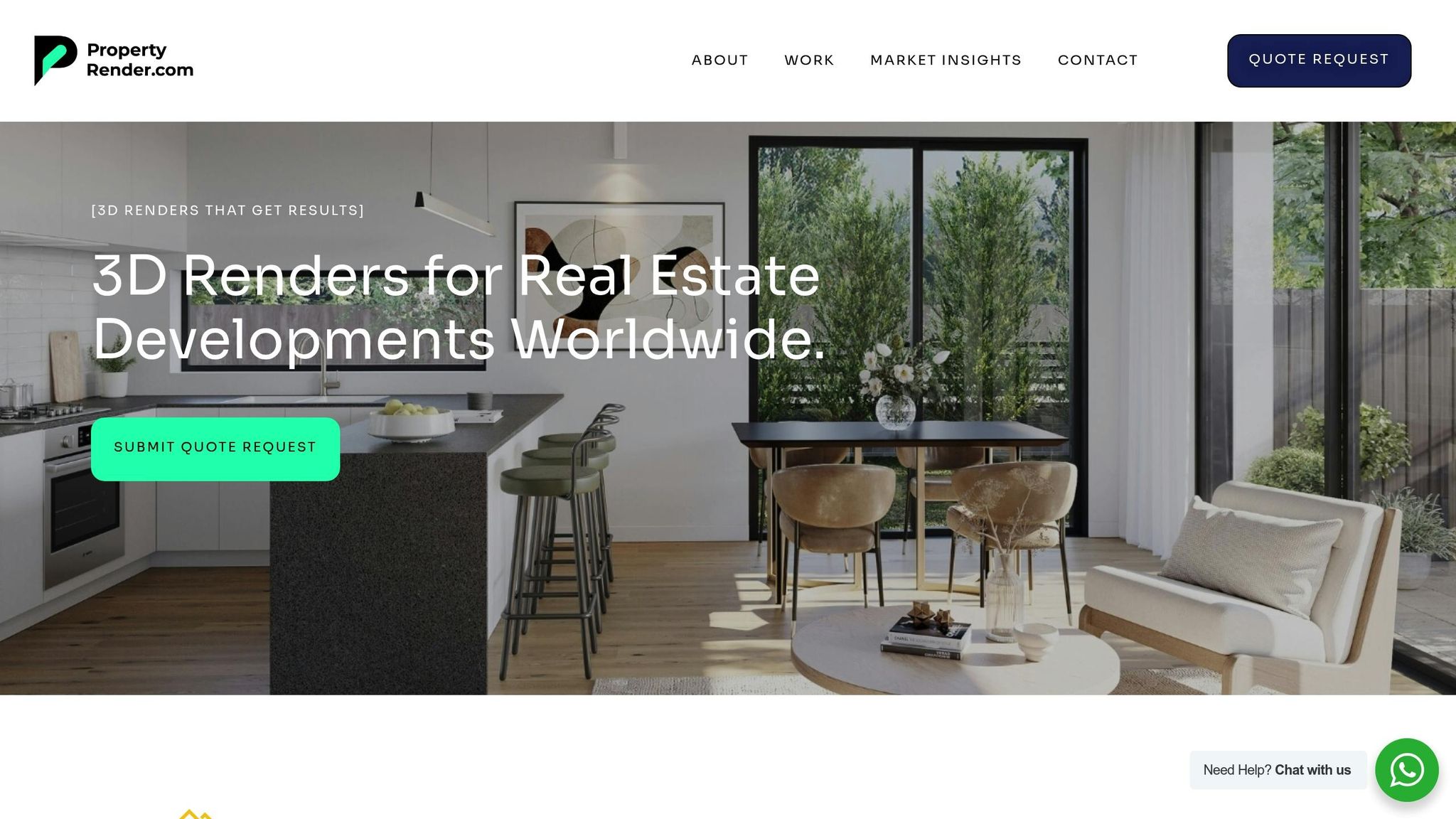
Property Render specializes in cutting-edge 3D visualization services that bring commercial real estate projects to life. Their tools not only streamline approval processes but also create striking presentations tailored for investors. By leveraging advanced technology, Property Render helps elevate your marketing efforts for commercial properties.
Comprehensive 3D Rendering Services
Property Render offers a wide array of architectural visualization services designed for commercial projects. Their interior renders provide detailed depictions of office layouts, retail environments, and hospitality spaces, showcasing lighting, materials, and spatial design. Meanwhile, exterior renders highlight building facades, landscaping, and the surrounding context, helping stakeholders see how a property fits into its neighborhood.
For larger developments, aerial renders deliver bird’s-eye views, while streetscape renders offer ground-level perspectives that illustrate how buildings interact with their immediate environment. Additionally, site plan renders transform technical blueprints into visually engaging, easy-to-understand graphics. Property Render can also bundle these elements into cohesive marketing packages, providing everything you need for a polished presentation.
CORE Virtual Reality Tours
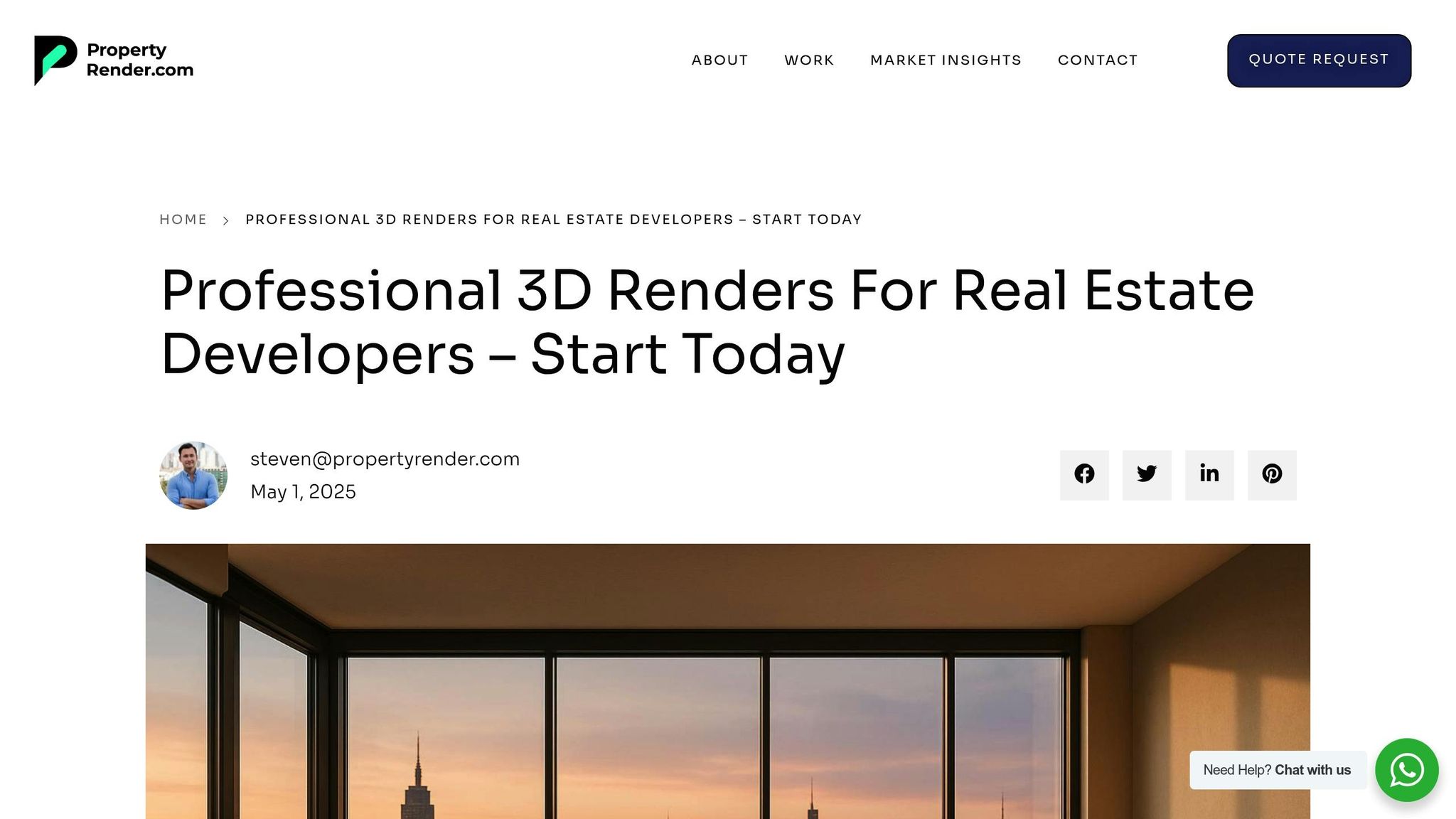
With CORE Virtual Reality Tours, Property Render takes visualization to the next level. These immersive tours allow users to virtually explore commercial spaces before they’re built. Investors and corporate tenants can navigate layouts, inspect finishes, and experience the flow of a property – all without leaving their location. This is especially valuable for out-of-state clients or those unable to visit in person, offering a detailed and realistic assessment of the space.
Standard vs. Premium Plans
To meet diverse project needs and budgets, Property Render offers two service tiers: Standard and Premium. Each plan is tailored to specific stages of development and marketing. Here’s how they compare:
| Plan Type | Primary Use | Key Features | Best Suited For |
|---|---|---|---|
| Standard Renders | Approvals & Planning | Interior/exterior renders, floor plans, site plans | Early-stage development, zoning approvals, basic marketing materials |
| Premium Renders | Marketing & Sales | Photorealistic renders, virtual walkthroughs, aerial views, streetscape renders | Active marketing campaigns, investor presentations, pre-leasing efforts |
Standard Renders are perfect for initial project phases, helping developers with zoning approvals and planning. These visuals provide clear and accurate representations of the project. As the focus shifts to marketing, Premium Renders step in with photorealistic visuals, virtual tours, and aerial perspectives that captivate investors and prospective tenants. Many developers start with Standard Renders and upgrade to Premium as they prepare for active marketing campaigns.
Conclusion
The commercial real estate industry is experiencing a major shift in 2025, driven by cutting-edge visualization technologies. Tools like real-time rendering are eliminating delays in design updates, enabling developers to make on-the-spot changes during client meetings. Meanwhile, interactive 360° tours and walkthroughs are revolutionizing property marketing, allowing potential tenants and investors to explore spaces remotely with incredible detail.
AI-powered visualization tools are taking efficiency to the next level, producing photorealistic renderings faster than ever and using predictive analytics to optimize layouts. Virtual and augmented reality are adding an immersive layer to the process, helping clients make quicker decisions and accelerating deal closures. Alongside these advancements, there’s a growing focus on showcasing sustainable design.
Visualizations now highlight eco-friendly features, reflecting the industry’s increasing commitment to green building practices. Developers who leverage advanced rendering techniques to emphasize sustainability are better positioned to attract corporate tenants who value environmental responsibility.
To stay ahead, commercial real estate professionals need a reliable visualization partner. Property Render’s Standard and Premium services, including their CORE Virtual Reality Tours, offer the versatility required for every stage of the process, from planning to marketing.
This transformation is already reshaping how properties are marketed and sold. By adopting advanced 3D visualization tools, developers can grab attention, engage clients more effectively, and close deals faster. As these technologies continue to advance throughout 2025, early adopters will lead the way in setting new benchmarks for the industry.
FAQs
How does AI-powered 3D rendering enhance decision-making in commercial real estate?
AI-powered 3D rendering is changing the game for decision-making in commercial real estate. With incredibly detailed, lifelike visualizations, it gives stakeholders a clearer view of properties, enabling them to evaluate potential, spot risks, and make quicker, more informed choices.
This technology simplifies property assessments and cuts down the time needed for lease or investment analyses, speeding up the entire sales process. Plus, it provides immersive visual experiences that captivate clients, making it easier to highlight a property’s strengths and overall value.
What are the benefits of using VR and AR for remote property tours in commercial real estate?
Using VR (Virtual Reality) and AR (Augmented Reality) for remote property tours has completely changed the way people explore real estate. These tools let potential buyers or tenants experience properties from anywhere, cutting out the hassle of long trips and reducing costs. With their immersive, 360-degree views, users can get a much clearer sense of a space, helping them feel more confident in their choices.
These technologies also open doors for international clients and busy professionals who might not have the time to visit properties in person. By creating an engaging and interactive way to explore listings, VR and AR not only make the process more convenient but can also build stronger client trust and speed up sales or lease agreements.
How does 3D rendering highlight sustainability features in commercial real estate projects?
3D rendering plays a crucial role in highlighting eco-friendly features by visually bringing elements like solar panels, green roofs, rainwater harvesting systems, and energy-efficient designs to life. These detailed visuals make it easier for developers, architects, and marketers to demonstrate the environmental advantages of a property to clients and stakeholders.
By offering realistic and immersive depictions of sustainable building practices, 3D rendering underscores a property’s dedication to environmentally conscious design. This approach not only boosts its overall appeal but also aligns with broader efforts to encourage responsible urban development.


